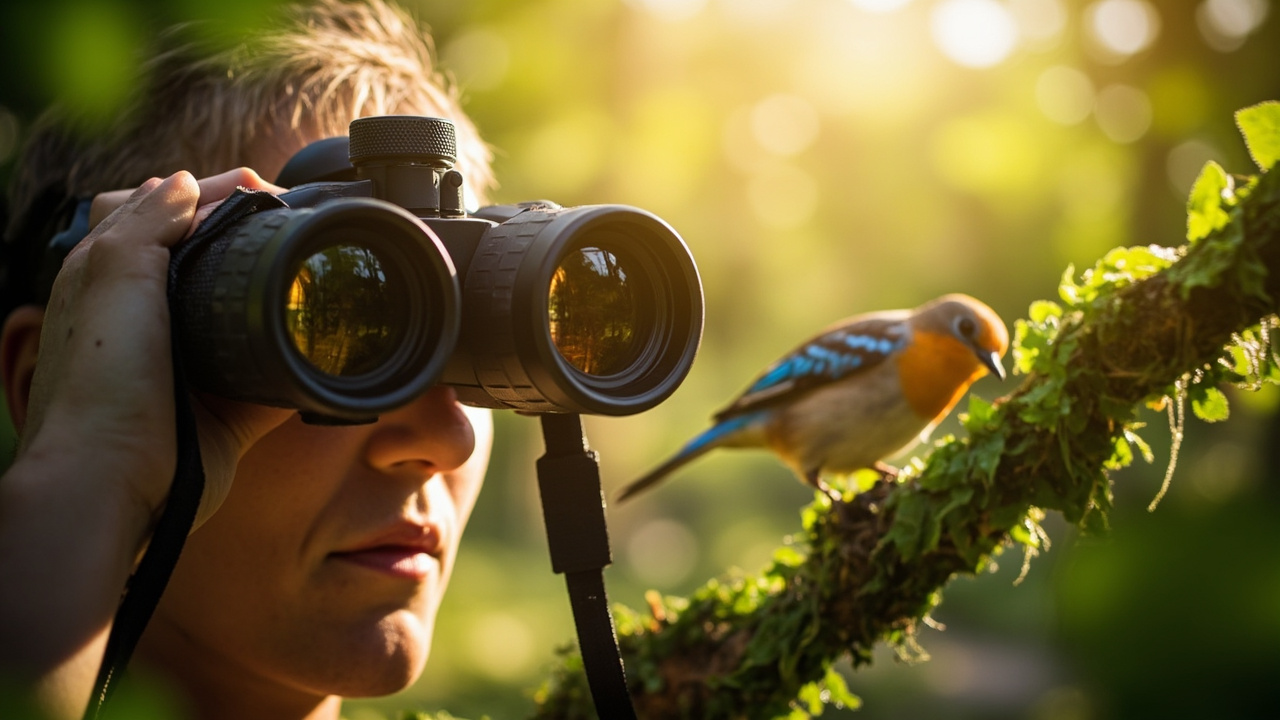
The Best Binoculars for Birding, Hunting, and Outdoor Survival in 2024
TL;DR: The Nikon Monarch M7 10x42 is the best overall binocular for outdoor enthusiasts in 2024, offering pro-grade optics at a mid-range price of around $550—but your ideal pick depends on budget, magnification needs, and use case.
Quality optics are no longer a luxury for casual hikers. For birders, hunters, search-and-rescue volunteers, and preppers alike, binoculars are mission-critical survival gear. A good pair lets you identify threats, scout terrain, track game, and read weather at distance—abilities that matter when you're miles from the nearest trailhead. According to Switchback Travel's lab-tested binocular rankings, the market has matured significantly through 2023–2024, with several models pulling away from the competition on optical clarity, low-light performance, and rugged durability.
This guide covers the five best binoculars across price tiers, the key specs that actually matter in the field, and pro tips for maintaining your optics in harsh conditions.
Why Binoculars Belong in Every Survival Kit
Binoculars extend your situational awareness further than any other piece of non-electronic gear. In a survival or emergency scenario, scanning ridgelines for rescuers, identifying edible vs. toxic plants at distance, or locating water sources before committing to a direction can mean the difference between a bad day and a fatal one.
Birdwatchers—the largest organized user group for binoculars in North America—have driven massive improvements in optical quality, ergonomics, and weather sealing over the past decade. The National Audubon Society, which publishes one of the most comprehensive binocular buying guides for field use, notes that modern roof-prism designs offer a slimmer, more durable profile than older Porro-prism models, making them easier to pack and harder to break (Audubon Binocular Guide).
The Cornell Lab of Ornithology's All About Birds resource similarly recommends 8x42 as the sweet spot for most field users: enough magnification to pick out distant subjects without the image-shake that plagues 12x and higher models when used handheld.
Top 5 Binoculars for 2024: Ranked by Use Case
1. Nikon Monarch M7 10x42 — Best Overall
Price: ~$550 | Weight: 1 lb 8 oz | FOV: 362 ft at 1,000 yds
The Nikon Monarch M7 10x42 earns the top slot because it performs like glass costing twice as much. Nikon uses ED (Extra-low Dispersion) glass to minimize chromatic aberration—the color fringing that makes cheap binoculars frustrating in bright conditions. The body is fully nitrogen-purged and O-ring sealed for waterproofing down to 3.3 feet, a spec that matters when you're glassing in rain or crossing streams.
The 10x magnification is better suited to open terrain—prairies, marshes, coastlines—than dense forest, where a wider field of view is more valuable. For hunters and preppers prioritizing long-range observation, the M7 10x42 is the clear choice in this price bracket. Switchback Travel ranked it best overall after head-to-head lab testing against more than a dozen competitors.
Best for: Hunters, open-country hikers, search-and-rescue, general survival prep.
2. Swarovski EL 8.5x42 — Best Premium Option
Price: ~$2,299 | Weight: 1 lb 13.5 oz | FOV: 399 ft at 1,000 yds
Swarovski's EL series has held the optical crown for over two decades. The 8.5x42 configuration hits a rare balance: slightly higher magnification than a standard 8x model, with a field of view wider than most 10x competitors. The SWAROVISION field-flattener lens system delivers edge-to-edge sharpness that photographers and serious birders describe as "looking through a window."
At over $2,000, the Swarovski EL is an investment, not an impulse buy. But the optics are so good that many professional ornithologists, wildlife biologists, and expedition guides consider it working equipment rather than a luxury. According to the Audubon Binocular Guide, premium glass from Swarovski, Zeiss, and Leica consistently outperforms mid-range options in critical low-light scenarios—dawn and dusk, when most wildlife is most active.
Best for: Serious birders, wildlife researchers, guide professionals, anyone who uses binoculars daily.
3. Kowa Genesis 8.5x44 — Best Optical Resolution
Price: ~$1,299 | Weight: 2 lb 1.2 oz | FOV: 397 ft at 1,000 yds
Kowa is less marketed than Swarovski or Nikon but respected in optical circles for precision Japanese manufacturing. The Genesis 8.5x44 uses Kowa's proprietary XD glass—a fluorite crystal lens that eliminates virtually all chromatic aberration. The result is color reproduction that rivals Swarovski at roughly 60% of the cost.
The tradeoff is weight: at just over two pounds, the Genesis is the heaviest model on this list. For stationary observers at a duck blind or hawk-watch platform, that's irrelevant. For hikers covering 15 miles a day with glass around their neck, it matters. Switchback Travel's testing confirmed the Genesis delivers among the highest resolution per dollar of any binocular currently available.
Best for: Hawk-watch enthusiasts, duck hunters, stationary wildlife observers.
4. Vortex Viper HD 8x42 — Best for Rugged Field Use
Price: ~$399 | Weight: 1 lb 8.5 oz | FOV: 409 ft at 1,000 yds
Vortex Optics, based in Barneveld, Wisconsin, built its brand on a simple promise: if your optics break or malfunction for any reason, Vortex repairs or replaces them free—forever. The VIP (Very Important Promise) warranty is unconditional and transferable, meaning a secondhand Vortex still carries full coverage. For survival and outdoor use, this warranty policy alone makes Vortex a compelling choice.
The Viper HD 8x42 uses high-density extra-low dispersion glass with XR anti-reflection coatings. The 409-foot field of view at 1,000 yards is the widest of any model in this guide, which makes it outstanding for scanning brushy terrain or tracking fast-moving birds in forest edges. Rubber armor over the magnesium chassis absorbs impacts; the body is waterproof and fog-proof.
Best for: Hunters, backpackers, anyone who operates in demanding conditions where gear takes abuse.
5. Celestron Nature DX 8x42 — Best Budget Pick
Price: ~$180 | Weight: 1 lb 6.2 oz | FOV: 388 ft at 1,000 yds
Celestron's Nature DX punches well above its price class. Phase-corrected BaK-4 prisms, fully multi-coated optics, and close-focus capability down to 6.5 feet make this binocular genuinely useful for both birding and nature study. It's not weather-sealed to the same standard as Vortex or Nikon, but it is waterproof and fog-proof under normal field conditions.
For beginners, the Nature DX is the recommended entry point by multiple birding organizations. The Cornell Lab's All About Birds specifically calls out the 8x42 configuration as ideal for new birders learning to hold a steady image while tracking moving subjects through tree canopy. At $180, it's an accessible tool that doesn't compromise the essential outdoor experience.
Best for: New birders, casual hikers, anyone building a first kit on a tight budget.
Key Specs That Actually Matter in the Field
Magnification vs. Stability
Higher magnification amplifies both the subject and your hand tremor. Beyond 10x, most users need a tripod adapter for sustained observation. For walking and stalking, 8x or 8.5x delivers the most usable image handheld.
Objective Lens Size and Low-Light Performance
The objective lens diameter (the second number in specs like 8x42) governs how much light enters the optic. Larger lenses collect more photons, brightening the image in dawn, dusk, and overcast conditions. A 42mm or 44mm objective is the practical standard for field binoculars; anything smaller compromises low-light performance.
Eye Relief for Glasses Wearers
If you wear eyeglasses, prioritize models with at least 15mm of eye relief. Most modern roof-prism binoculars include twist-up eyecups that lock at multiple positions—confirm this feature before purchasing if glasses are a factor.
Weight and Pack Integration
For multi-day backcountry trips, every ounce counts. A binocular over 1 lb 10 oz will fatigue your neck over a full day. Lightweight harness systems from brands like Vortex and OpticsPlanet distribute weight across the shoulders rather than the neck—a worthwhile $25–$40 add-on for heavy glassing days.
Field Maintenance: Keeping Your Optics Mission-Ready
- Clean lenses with a dedicated microfiber cloth only. Paper towels and shirt fabric scratch coatings.
- Store in the supplied case when not in use to protect against dust, humidity, and impact.
- Retract eyecups when packing to prevent cracking during compression in a stuffed pack.
- Use lens caps religiously on the objective lenses—one grit particle can permanently scratch a $2,000 lens.
- Avoid extreme temperature swings. Moving from a cold car to a warm blind causes condensation inside nitrogen-purged barrels if seals are compromised. Inspect O-rings annually.
Bottom Line
For most outdoor enthusiasts—birders, hunters, hikers, and preppers—the Nikon Monarch M7 10x42 at ~$550 delivers the best combination of optical quality, durability, and value available in 2024, as confirmed by Switchback Travel's independent lab testing. Serious birders and wildlife professionals willing to invest should look at the Swarovski EL 8.5x42. Anyone who works in harsh conditions should consider the Vortex Viper HD and its lifetime warranty. And beginners can start confidently with the Celestron Nature DX at $180 without compromising the core experience.
The right optics won't just improve your birdlist—they'll expand your situational awareness in the field and, in a true emergency, could help you find your way home.