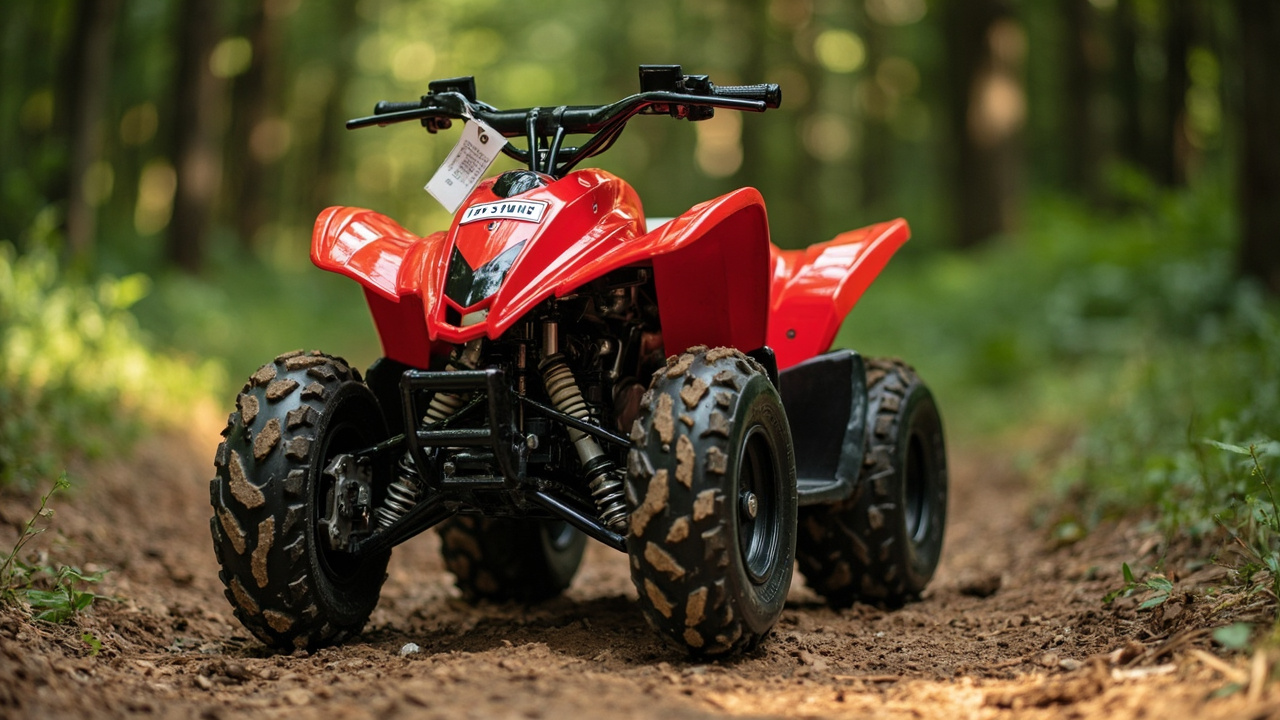
TL;DR: About 700 Sierra 125U youth ATVs imported by Lil Pick Up Inc. were recalled on May 21, 2026 for crash and burn dangers, with a full refund and free pickup offered and no injuries reported.
Federal safety officials ordered owners to park the machines immediately and seek repayment.
The action covers gasoline-powered youth models marketed under several labels including Rider 9, according to the U.S. Consumer Product Safety Commission notice summarized by KTLA. Around 700 units are affected. The importer is identified as Lil Pick Up Inc. of Rowland Heights, California. Manufacturing origin is listed as Vietnam. No incidents or injuries were listed at the time of the announcement.
For backcountry families and preparedness-minded riders, the case carries a broader lesson. A youth-sized off-road vehicle is still a motorized trail machine with heat, fuel, brakes, and handling limits. When any of those systems fall outside the federal mandatory ATV safety standard, the margin for a young operator narrows quickly. This report explains which machines are included, what failed, how to confirm the model, where the units were sold, and how the refund pickup works.
What was recalled on May 21, 2026
The product is described as Sierra 125U Youth All-Terrain Vehicles. The recall date is May 21, 2026. The recall number is 26-501. The remedy is a refund.
The scope is about 700 vehicles, according to the CPSC recall notice republished through PublicNow. That notice names Lil Pick Up Inc. as the importer and gives a Rowland Heights, California address.
The machines were sold under various brand names including Rider 9. That multi-label detail matters for outdoor households because plastic bodywork and dealer branding can differ while the underlying model remains the same. Owners should therefore check frame markings rather than relying on the name printed on the fenders or fuel-tank cover.
Coverage of the announcement by KTLA likewise describes the vehicles as Sierra 125U youth ATVs manufactured in Vietnam and sold under various brand names including Rider 9. The same coverage states that no injuries had been reported so far.
Four separate safety failures in one model
The recall notice lists four distinct problems, all tied to an alleged violation of the federal mandatory ATV safety standard.
First, the youth machines do not satisfy mechanical suspension requirements. Suspension affects how a small ATV tracks over ruts, rocks, washboards, and trail edges. For a lightweight rider, unexpected handling behavior can make a routine turn or obstacle crossing harder to control.
Second, the reverse indicator light does not illuminate. A non-working reverse lamp creates confusion about direction of travel, especially around camps, staging areas, trailheads, driveways, and group rides where children, adults, pets, and other vehicles share tight space. The agency characterizes that defect as a crash hazard.
Third, the parking brakes do not hold. A youth ATV that rolls when parked can move on a slope, at a campsite, in a driveway, on a trailer, or beside a trail. The agency characterizes that defect as a collision hazard.
Fourth, surfaces near the footwell can become hot enough to cause severe burns. Footwells sit where a young rider’s boots, lower legs, and riding pants rest during operation and during mounts and dismounts. Heat in that zone is particularly relevant on slow rides, idling, loaded climbs, and warm-weather outings.
The official hazard summary groups those issues as crash and burn dangers posing a risk of serious injury or death, according to the CPSC material summarized by WRNJ Radio. Consumers were told to stop using the vehicles immediately.
How to tell whether your youth ATV is included
The model name Sierra 125U appears on the VIN plate on the front frame column, according to the recall description. Owners should look at the forward frame post rather than searching only for a brand badge.
There is also a second plate on the left front side of the frame column. That plate states that the ATV is subject to Lil Pick Up Inc.’s Action Plan approved by the U.S. Consumer Product Safety Commission. That wording is part of the identification criteria in the recall notice.
The affected colors are red, blue, black, pink, gray, spider red, and spider blue. Color alone does not confirm inclusion, and absence of a familiar color name does not clear a machine. The VIN-plate model designation is the controlling check described by the agency.
Reporting by RideApart notes the same identification challenge from a parent’s perspective. The report observes that there is no comprehensive list of all brand names involved, which makes a frame-plate check especially important for families who bought a youth ATV under a store or distributor label.
Where the ATVs were sold and what they cost
The sales window ran from October 2025 through April 2026. Distribution included online sales and in-store sales at named dealers plus other retailers.
Named sellers listed in the recall include Cougar Cycle, Texas Star dba Flying Scooter, Vitacci Motorcycles, Dallas Power Sport, and Tool Store Go-Kart Shop. Coverage by KTLA repeats the same dealer list and notes both online and in-store sales.
The price range was between $800 and $1,300. That price band places the machines within reach of many families shopping for a first youth quad for farm chores, ranch use, campground transport, or trail learning.
For readiness planning, the sales period matters. A machine purchased in late 2025 may already have a season of riding, storage, maintenance, and youth-driver habit formation behind it. A spring 2026 purchase may have very few hours but could be headed into peak summer riding season. In either case, the federal instruction is the same: stop use and pursue the refund process.
What owners should do now
The prescribed remedy is a full refund, not a field repair. Consumers should stop using the recalled youth ATVs immediately and contact Lil Pick Up.
The company contact listed in the recall is 951-245-5663, collect, from 8 a.m. to 5 p.m. CT Monday through Friday. The listed email is [email protected]. Online information is available at www.lilpickup.us/recall-detail.html and www.lilpickup.us by selecting Recall at the top of the page, according to the PublicNow republication of the CPSC notice.
Buyers will be asked to visit www.lilpickup.us to register for the recall. After registration, they receive instructions for returning the ATVs, including free pickup and transportation. That pickup element is important for rural owners because transporting a non-compliant youth quad to a distant dealer can otherwise require a truck, trailer, ramp, tie-downs, and time.
Families should gather proof of purchase, photographs of the VIN plate and Action Plan plate, and the machine’s present location and access details before calling or registering. They should not allow further youth practice rides, sibling test rides, or campground loans while awaiting pickup. They should store the parked ATV where it cannot roll, where children cannot start it, and where fuel and battery hazards are controlled.
Why this is the third warning tied to the same importer
The May 21 action did not arrive in isolation. Reporting published May 26 by RideApart describes the Sierra 125U case as the third youth ATV model in the past year to receive a safety recall involving risks including serious injury or death, with all three imported by Lil Pick Up.
According to that RideApart report, the affected ATVs in these cases were sold under multiple brand names, complicating identification for parents. The same report states that the second of the three cases was worse because a child had to die before that recall was issued. The current Sierra 125U notice itself lists no reported incidents or injuries.
That pattern matters for survival-backpack readers because repeat import-source problems suggest a buying risk that goes beyond one model year. A youth ATV is often selected by price, availability, color, or dealer proximity. This history points toward a different checklist: confirm the importer, confirm the exact model on the VIN plate, verify compliance with the federal mandatory ATV standard, and preserve sales records.
Federal law also prohibits selling products subject to a Commission-ordered recall or a voluntary recall undertaken in consultation with the CPSC, according to the CPSC announcement distributed by PR Newswire. That means the recalled Sierra 125U machines should not appear in new showroom inventory, secondhand listings, farm auctions, or peer-to-peer sales as usable youth riders.
Outdoor readiness lessons for families with youth riders
A recall with zero reported injuries is still operational information. It means the hazard was identified before emergency-room visits accumulated for this model, not that the machine is safe to keep using.
Parents planning youth riding should treat age fit, size fit, training, supervision, terrain selection, speed control, protective equipment, and mechanical condition as one system. A small quad can still climb, tip, roll, collide, stall on a slope, or burn a leg near hot components. Suspension, brakes, indicator lights, and heat shielding are not cosmetic features; they shape whether a young rider can start, stop, park, and be seen safely.
Before any future youth ATV purchase, record the full importer name, model designation, VIN, manufacturing origin, dealer identity, purchase date, and price. Photograph all frame plates on delivery day. Keep the manual and any Action Plan or compliance labeling with the ownership file. Check the CPSC recall site by exact model rather than by colorful brand name.
If a household already owns an included Sierra 125U, the safest backcountry decision is also the simplest. Ground the machine, complete the refund registration through Lil Pick Up, use the free pickup and transportation process, and replace planned youth-riding time with non-motorized outdoor skills until a compliant, properly fitted vehicle and training plan are in place.
Sources referenced
- There's Another Youth ATV Recall For A Serious Risk of Injury or Death, And It's The Same Importer - RideApart (https://www.rideapart.com/news/796662/lil-pick-up-sierra-125u-atv-recall/)
- Sierra 125U youth ATVs recalled over potentially deadly safety flaws - KTLA (https://ktla.com/news/nationworld/cpsc-recalls-sierra-125u-youth-atvs/)