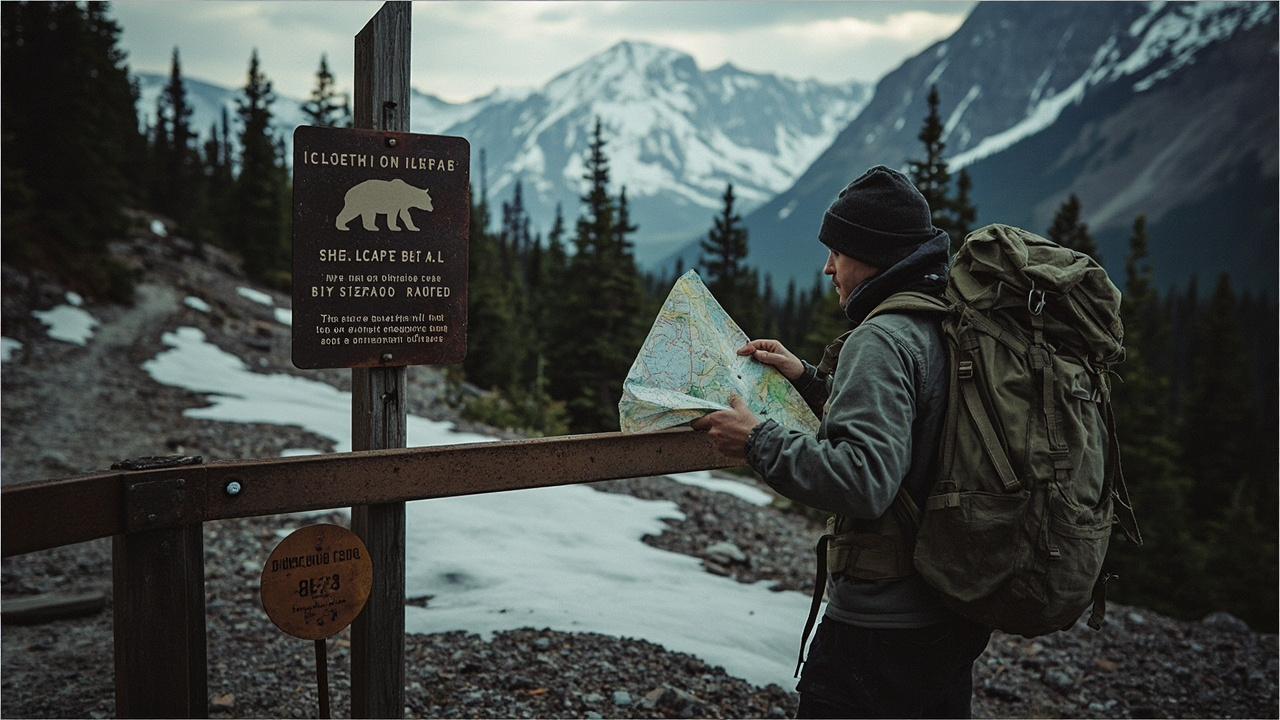
TL;DR: A 10-mile section of the Continental Divide Trail on the Chief Mountain route in Glacier National Park closed June 8 due to bear activity, with no reroute available.
Emergency Closure Hits Popular Southbound Start
Authorities shut a 10-mile portion of the Continental Divide Trail (CDT) inside Glacier National Park on June 8 after reports of heightened bear activity, according to The Trek.
The action covers the Chief Mountain route between southbound mile 7.5 and mile 17.5, according to The Trek and Backpacker. In an alert issued June 8, the Continental Divide Trail Coalition (CDTC) said the National Park Service (NPS) ordered the shutdown, Backpacker reported.
Hikers must avoid the segment entirely. The CDTC confirmed no alternate reroute exists for the closed section, The Trek reported.
That detail matters for trip planning. Chief Mountain is one of two recognized northern endpoints of the CDT and the favored launch point for southbound thru-hikers, The Trek reported. Backpacker described the CDT as unusual among major long-distance trails because it maintains two official northern termini along the United States-Canada border inside Glacier.
The Chief Mountain Terminus sits at the border crossing of the same name. Its approach generally uses a lower-elevation path, which makes it attractive to early-season hikers heading south, Backpacker reported.
With that low-elevation entry now off limits, early-season itineraries face immediate disruption. The coalition advised hikers to stay clear and either explore other parts of the CDT or postpone travel until officials reopen the segment, The Trek reported.
When Could The Trail Reopen?
Park managers expect the closure to last for an extended period, but they have not set a firm reopening date.
The Trek reported the park anticipates the restriction could continue through June 18, while stressing that wildlife behavior will determine the actual schedule.
Backpacker gave a slightly longer planning estimate, reporting the park service expects the trail to stay closed until about June 20, with the possibility that staff could end the closure earlier or extend it further.
In practical terms, hikers should treat both dates as estimates rather than promises. The CDTC emphasized the timeline remains subject to change based on animal movement, The Trek reported.
The coalition urged travelers to check the official Glacier National Park trail status page for current information because conditions can shift quickly, The Trek reported.
For wilderness readiness, that guidance carries a broader lesson. Bear-related closures in Glacier during early summer often depend on food sources, snowmelt, and repeated sightings rather than a calendar. Travelers who build flexible start dates and backup sections into a thru-hike plan can absorb a one- to two-week administrative closure without abandoning a season.
Waterton Alternative Remains Open But Snowbound
The Waterton route, the CDT's other northern option, was not included in the June 8 closure, The Trek reported.
That path leads toward the Waterton Townsite through Canada's Waterton Lakes National Park, Backpacker reported. Unlike Chief Mountain, it climbs to higher elevation.
Early-season access there remains difficult. The CDTC cautioned that facilities and campsites along the Waterton section were still in winter status and large parts of the tread remained snow-covered, The Trek reported. Backpacker similarly reported that much of the higher route was still buried by snow and that campsites and facilities were operating under winter conditions.
The coalition suggested southbound hikers consider postponing their departures or moving their plans to different sections of the CDT, The Trek reported. Backpacker reported a parallel recommendation: southbound thru-hikers could push back departures or skip the affected miles for now.
For prepared adventurers, the message is straightforward. An open route is not necessarily a ready route. Winter-status campsites can mean closed water systems, unmaintained toilets, unavailable reservations, and limited ranger support. Snow-covered tread can hide blazes, cairns, and junctions while increasing navigation time, energy use, and exposure risk.
Anyone still considering Waterton should verify border-crossing rules, overnight permit requirements, snow-travel equipment needs, and campsite availability before traveling to Glacier. Monitoring the park trail status page remains the most direct way to track changes, The Trek reported.
Why Officials Acted: A Dangerous Spring In Glacier
The June 8 CDT closure followed a series of serious bear encounters in the region, Backpacker reported.
Less than two weeks earlier, a hiker suffered serious injuries on Glacier's Grinnell Glacier Trail, Backpacker reported. The outlet identified the hiker as Daniel Crago and reported his account that a subadult grizzly seized his arm and pulled him down a slope after a close-range surprise meeting.
An NPS news release dated June 2 provided the agency's account of the May 28 incident. A 32-year-old man received non-life-threatening injuries during a surprise meeting with a grizzly at approximately 12:45 p.m. on the Grinnell Glacier Trail, the agency stated.
The meeting happened in a snowfield about 3.5 miles up the trail, where loud rushing water made detection difficult for both person and animal, the NPS stated. The bear charged and fractured the man's arm, the agency stated.
Nearby hikers moved quickly to help, and the bear left the area, the NPS stated. The group gave initial medical aid and started emergency communication, the agency stated.
Dispatch received an SOS at approximately 12:51 p.m., according to the NPS. Park personnel and ALERT responded, and ALERT transported the patient to Logan Health Medical Center in Kalispell, the agency stated.
The Grinnell Glacier Trail was temporarily closed and would reopen when park staff judged it appropriate, the NPS stated.
Earlier in May, Glacier recorded its first fatal bear attack in 28 years when search teams found missing hiker Anthony Pollio dead after an apparent meeting with a bear on the Mount Brown Trail, Backpacker reported.
Pressure was not limited to Glacier. In early May, Yellowstone National Park closed 6 miles of the CDT after a bear attacked and injured two hikers near Old Faithful, Backpacker reported.
Together, those incidents help explain a cautious approach around the Chief Mountain corridor at the start of the southbound season. Agency closures aim to reduce surprise meetings while bears use low-elevation spring habitat and while snow constrains both human and animal travel routes.
Bear-Country Skills For Thru-Hikers And Section Hikers
The current closure removes one hazard area, but it does not remove the need for bear awareness elsewhere in Glacier and along the CDT.
The NPS publishes basic bear-country practices for Glacier visitors. The agency advises visitors never to approach a bear, to remain alert and avoid wearing headphones on trails, and to hike in groups when possible, the NPS stated.
The agency also advises making noise near streams, dense vegetation, and blind corners, storing food, trash, and scented items properly, carrying bear spray, and never running from a bear, the NPS stated.
If a meeting occurs, the NPS advises staying calm, speaking in a steady voice, backing away slowly, avoiding sudden movements, and reporting the encounter to park staff as soon as it is safe, the agency stated.
Those steps align with the circumstances described on May 28, when sound from rushing water limited early warning and the encounter happened at close range in snow, according to the NPS.
For CDT hikers, several readiness habits deserve attention during the closure period:
Check Status Before Moving Camp
Treat the NPS trail status page as part of the daily routine, alongside weather, snow, water, and permit checks. The CDTC points hikers to that page because closure boundaries and dates can change rapidly, The Trek reported.
Do Not Create A Social Reroute
With no official detour, walking around gates, cutting cross-country, or following informal user tracks can increase resource damage and the chance of another wildlife encounter. The CDTC's message was direct: avoid the area, The Trek reported.
Keep Food And Scent Discipline Everywhere
Proper storage of food, trash, and scented items remains central to park safety guidance, the NPS stated. That habit protects camps and reduces the chance that a bear links people with calories.
Travel Ready For Snow On The Open Option
If Waterton remains the only northern terminus available, expect winter-like travel. The CDTC noted snow coverage and winter-status facilities, The Trek reported. Navigation tools, traction, cold-weather shelter, and conservative mileage plans become more important when markers are buried.
Preserve Flexibility
The CDTC recommendation to delay a start or hike another CDT section reflects the reality of a long trail with variable spring conditions, The Trek reported and Backpacker reported. A flip-flop, a southward move to a lower-snow section, or a later departure can protect both safety margins and morale.
Hikers with fixed travel dates should contact land managers early about permits, campsites, and border procedures rather than arriving at Chief Mountain hoping the gates have reopened. A closure tied to animal behavior can end ahead of schedule or continue beyond the initial estimate, Backpacker reported.
Sources referenced
- Section of CDT in Glacier National Park Closed Due to Bear Activity - The Trek (https://thetrek.co/continental-divide-trail/section-of-cdt-in-glacier-national-park-closed-due-to-bear-activity/)
- Key Section of Continental Divide Trail Closes Due to Bear Activity in Glacier - Backpacker (https://www.backpacker.com/news-and-events/news/key-section-of-continental-divide-trail-closes-due-to-bear-activity-in-glacier/)