TL;DR: Mount Rainier's 93-mile Wonderland Trail was not fully hikeable over Memorial Day weekend 2026 — a southern segment between Narada Falls and Stevens Canyon Road closed May 20 after a ranger collided with a black bear, then reopened, while a northern bear closure around Pyramid Creek still forced permit holders to reroute.
A two-part closure on one holiday weekend
Hikers arriving for Memorial Day found the Wonderland Trail split by two separate wildlife actions. According to the Tacoma News Tribune, Mount Rainier National Park announced on social media May 20 that the section from Narada Falls to Stevens Canyon Road was shut for unusual bear activity.
That southern closure was temporary. According to KIRO 7 News Seattle, park staff swept the corridor for additional hikers, monitored activity, and had the Narada Falls to Stevens Canyon Road section fully open again by May 27.
A second report pointed to the north side. According to Parks Decoded, the National Park Service issued a May 21 closure near Pyramid Creek after multiple encounters between black bears and hikers in recent weeks, affecting permits for segments between Ipsut Creek and Mystic Lake. That account described northern camp zones at Ipsut Creek, Carbon River, Mystic Lake and Granite Creek as off-limits for the weekend, with the park offering full refunds or shifts of start dates into late June.
For prepared adventurers, the lesson is to check the current corridor, not just the trail name. One part of Wonderland could be listed as open while another remained gated for bears.
What actually happened on the trail
The southern incident was odd even by park standards. According to the Tacoma News Tribune, the National Park Service public affairs office confirmed by email that the unusual activity was a ranger colliding with a black bear during a foot patrol to Reflection Lakes.
The agency language was consistent across reports. The ranger was unharmed, the bear did not display aggressive behavior, and the encounter appears to have been inadvertent, according to the Tacoma News Tribune. Out of an abundance of caution, staff cleared hikers from the area and temporarily closed the Narada Falls to Stevens Canyon Road section while activity was monitored.
According to KIRO 7 News Seattle, the shutdown began May 20 after the ranger ran into the bear during the Narada Falls to Reflection Lakes patrol. Staff then swept the area for additional hikers before imposing the temporary closure.
The northern situation was described differently. According to Parks Decoded, the Pyramid Creek action followed persistent food-seeking behavior, including an incident where a bear spent 20 minutes working a canister outside a tent at Ipsut Creek Camp. The hiker followed protocol and the bear eventually left, but the corridor was closed until the animal moved on or was hazed from the area.
Why late May concentrates bears and hikers
Late May squeezes people and wildlife into the same low ground. According to Parks Decoded, snow still choked most of the tread above 5,000 feet, while bears emerging from winter dens gathered in low-elevation old-growth corridors crossed by Wonderland.
The timing amplified disruption. Memorial Day traditionally marks the unofficial start of permit season, when thru-hikers begin clockwise loops from Longmire, according to Parks Decoded. Most thru-hikes are attempted between mid-July and late September, when snowfields retreat and river crossings drop, but early-season demand pushes some parties into June snow and swollen meltwater creeks.
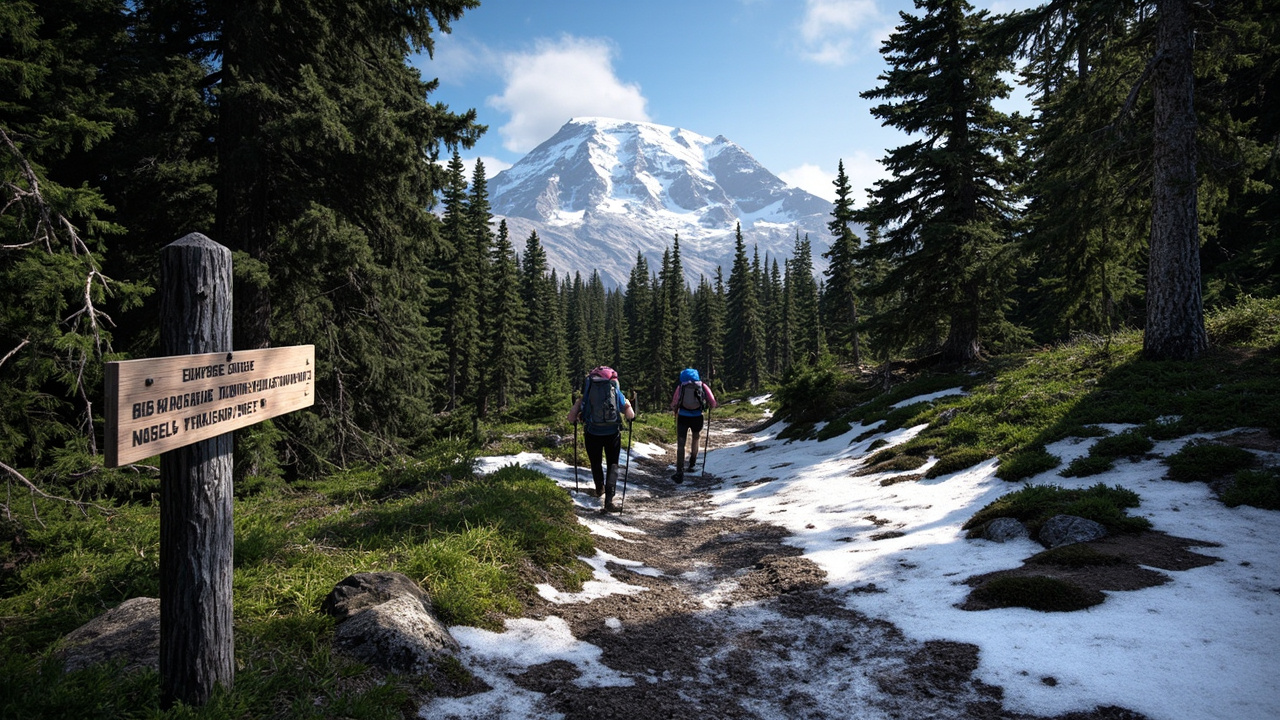
A field report from the same weekend shows the snow line precisely. A Washington Trails Association trip report for a May 23 day hike from Longmire to Indian Henry's Hunting Ground described first ground snow at 4,900 feet elevation just past Devil's Dream Camp, with about two miles of snow travel and occasional thigh-deep postholes, though walkers generally sank only a few inches. Air temperatures were in the high 50s with sunshine, and waterproof socks carried the author through.
That 16-mile route with 3,800 feet of elevation gain, starting and finishing at Longmire, followed Wonderland out to Indian Henry's Cabin, according to the Washington Trails Association report. Boot tracks from a prior hiker and a GPS app kept the party on tread mostly hidden below snow.
Snow, water and deadfall: what thru-gear must handle
The Wonderland Trail is listed at 93.0 miles roundtrip with 22,000 feet of elevation gain, according to the Washington Trails Association trail page attached to the May trip report. Thru-hikes take 10 to 14 days depending on daily mileage and tolerance for climbing, according to Parks Decoded.
Early-season travelers faced three mechanical problems. First, snowfields to cross that could be difficult, with trees down across trail and a bridge out noted in the Washington Trails Association trip conditions for the Longmire to Devil's Dream Camp section.
Second, creek crossings without summer infrastructure. The May 23 party reported the log bridge was not in place at Pyramid Creek, leaving a balancing crossing on other logs described as a sketchy balancing act, according to the Washington Trails Association report. The Kautz Creek crossing was called the biggest navigation challenge, requiring hikers to hug the hillside in a near loop after the creek, aided by helpful cairns rerouting back to known Wonderland tread.
Third, blowdown. The same report noted spots with heavy blowdown that required leaving the trail to get around, though all obstacles were described as doable.
Park guidance for the southern half still called for caution. According to Parks Decoded, snow covered segments near Panhandle Gap and Indian Bar, with knee-deep drifts in shaded stretches and stream crossings near the Cowlitz Divide requiring trekking poles and tolerance for cold water.
Permits, refunds and rescheduling tactics
If a closure hits a reserved itinerary, do not walk through it. According to Parks Decoded, permits including Ipsut Creek, Carbon River, Mystic Lake or Granite Creek camp zones required rerouting or rescheduling, with the park offering full refunds or the option to shift start dates into late June when the corridor typically reopens.
That advice matters because Wonderland campsites are zone-specific. A southern half itinerary remained possible in theory, but snow and meltwater still governed pace and safety, according to Parks Decoded.
For parties rescheduling into June, the same account suggested requesting campsites on the eastern flank between Summerland and Nickel Creek, described as melting out faster than the west side and less exposed to most bear closures. That is presented as a trip-planning tip, not a guarantee that any corridor will be open on a given date.
All backcountry campers should expect canister rules. According to Parks Decoded, the park requires approved canisters for all backcountry camping, with rangers checking at trailheads, because Rainier black bears are food-motivated and willing to test canisters.
If you had to salvage the weekend
Shorter backpacking options were limited. According to Parks Decoded, the 34-mile Northern Loop Trail shares Wonderland-style climbs, river crossings and bear country but was also closed, while the 17-mile Eastside Trail between White River and Box Canyon through Summerland and Indian Bar was described as open and navigable with microspikes and caution at stream crossings. Permits were still required and campsites booked weeks ahead.
Day hikers had broader choices. According to Parks Decoded, Paradise remained the most accessible high-elevation zone, with the Skyline Trail loop offering subalpine meadows and glacier views without an overnight permit.
Comet Falls was listed as a 3.8-mile round trip from the Longmire area through old-growth forest to a 320-foot cascade, muddy in late May but snow-free, according to Parks Decoded. Trails around Eunice Lake and Tolmie Peak near Mowich Lake were described as seeing a fraction of Paradise traffic, though the road there often does not open until late June most years.
Crowds compounded route decisions. The May 23 Washington Trails Association party reported only a few dozen vehicles in the Longmire lot at a 7 a.m. start and being the only vehicle through the entrance in the 6 a.m. hour, but a line at least two miles long waiting to enter when exiting at 3 p.m. The Rampart viewpoint about 1.8 miles from Longmire was very busy in the afternoon.
Weather and fees also shaped plans. According to The Seattle Times, entry to all national parks including Mount Rainier National Park was free on Memorial Day, with the usual $30-per-vehicle fees waived. The National Weather Service in Seattle predicted rain, breezy winds and a slight chance of thunderstorms, with Seattle and areas south expected to receive up to a quarter-inch of rain, gusts up to 40 miles per hour along the coast, and highs in the low 60s.
Bear safety protocol for Rainier spring travel
There are no brown bears or grizzly bears in Mount Rainier National Park, only black bears that can be black, brown or cinnamon in color, according to park bear background summarized by Unofficial Networks. Males weigh from 150 to 500 pounds and females between 90 and 250 pounds.
Park messaging after the ranger collision stressed spring vigilance. According to KIRO 7 News Seattle, the park said encounters between wildlife and humans can occur, particularly during periods of increased wildlife activity in spring, and reminded visitors to remain alert, maintain appropriate distance, hike in groups when possible, and follow wildlife safety guidance.
The Tacoma News Tribune added operational detail: the National Park Service warns that bluff charges are normal behavior, including huffing, foot-stomping and running at people who get too close, interrupt a meal or encounter a sow with cubs. The proper response is to keep distance, speak loudly and let the bear know you are there. Visitors were asked to alert the park service to sightings, especially near campgrounds or trails.
Backcountry behavior guidance summarized by Unofficial Networks called for staying calm, not approaching, backing away slowly while facing the bear, standing ground if followed, shouting and appearing large by raising arms or trekking poles, throwing non-food objects only if necessary, never feeding bears, and using bear spray only as a last resort and only if the bear is within 20 yards. If a black bear attacks, the guidance is to fight back and not play dead. Recommended viewing distance is 300 feet, or about 20 cars lined up end to end.
Sources referenced
- Ranger's collision with bear was reason popular Mount Rainier trail closed - Tacoma News Tribune (https://www.thenewstribune.com/outdoors/article315909730.html)
- Ranger's brush with a black bear temporarily closed this Mount Rainier trail - KIRO 7 News Seattle (https://www.kiro7.com/news/local/rangers-brush-with-black-bear-temporarily-closed-this-mount-rainier-trail/HV3HYHVXMRCWTMOGX6ICAB5IPY/)