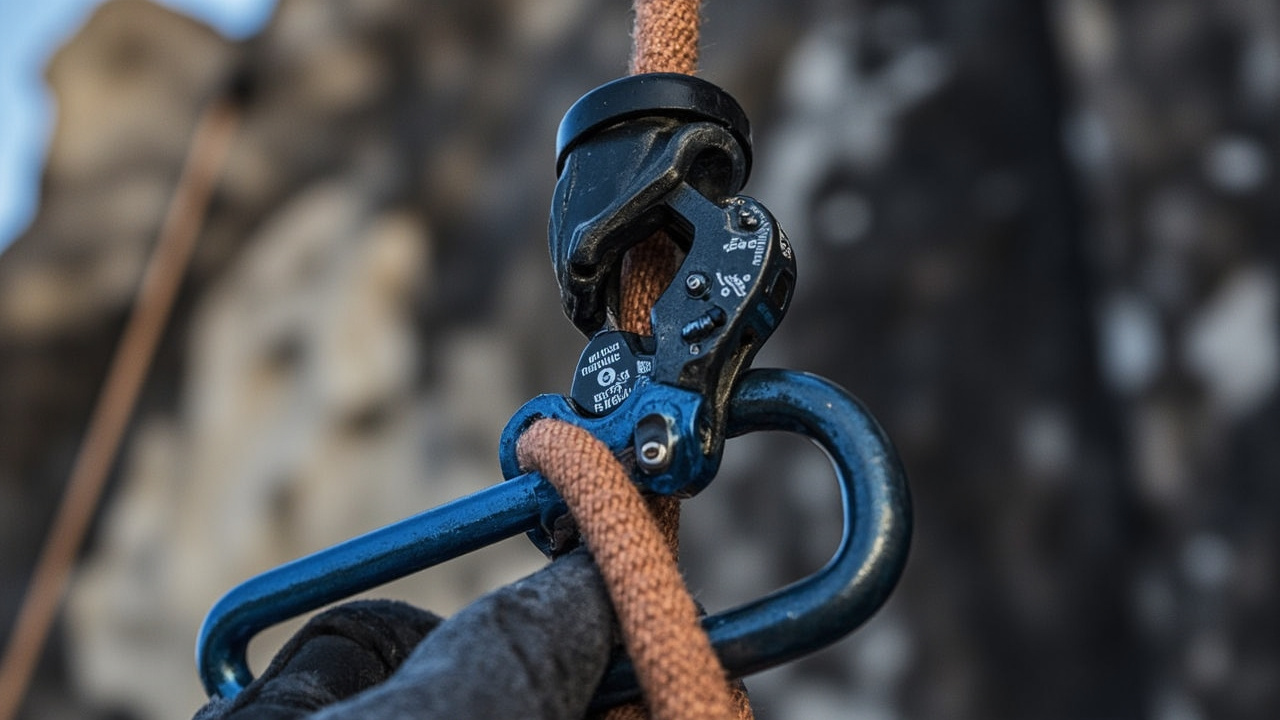
TL;DR: Stop using Ocun Condor HMS Triple Locking Carabiners in dark gray and blue with the listed batch numbers, because the gate may fail to close on its own and must be shut by hand, creating a fall danger.
Recall at a glance
OCUN NA is recalling Ocun Condor HMS Triple Locking Carabiners, according to OTWnews reporting that cites a CPSC Recall Notice. The OTWnews notice lists the recall date as April 2, 2026.
The action is described as a Product Recall with the source identified as a CPSC Recall Notice, according to OTWnews. The product named in the summary is Ocun Condor HMS Triple Locking Carabiners.
The stated hazard is that the gate can malfunction and not close automatically, requiring manual closure by hand, according to OTWnews. The same notice states that the condition poses a risk of serious injury or death due to falling.
No incidents or injuries were listed at the time of the notice. OTWnews lists Reported Incidents/Injuries as None reported.
The remedy directs consumers to stop using the recalled carabiner immediately and contact OCUN NA for a free replacement, according to OTWnews. Consumers are asked to complete a recall form and send it to [email protected], then follow instructions to obtain a prepaid return shipping label and send back the recalled product.
A May 27, 2026 post referencing the issue describes it as a recall of certain batches of CONDOR HMS Triple (03550) carabiners and related belay sets due to a potential locking mechanism issue. That description aligns with the gate-closure problem identified in the OTWnews summary.
What product is covered
The recall involves Ocun Condor HMS Triple Carabiners sold in dark gray and blue, according to OTWnews. The carabiners are described as having an independent internal wire gate for belaying and rappelling and a triple locking action gate.
The model reference CONDOR HMS Triple (03550) appears in the May 27, 2026 announcement shared through Recreation Law channels. That announcement also mentions related belay sets as part of the affected population.
For backcountry and climbing readiness, the key point is specificity. The notice does not describe a recall of every Ocun carabiner. It names the Condor HMS Triple Locking Carabiner in the stated colors and construction.
Dark gray and blue is the color combination to check first, according to OTWnews. The presence of an independent internal wire gate for belaying and rappelling, combined with triple locking action, further identifies the design.
Batch numbers and where to find them
The affected batch numbers listed by OTWnews are 24003xx, 24004xx, 24010xx, 24023xx, 24024xx, 24025xx, 25005xx and 25006xx. The notice uses xx placeholders after the first five digits.
The batch number is found on the spine of the carabiner, according to OTWnews. That location means users do not need tools to begin the check.
Read the full sequence on the spine in good light. Compare each character against the eight listed prefixes. If the marking matches one of the eight entries, treat the unit as included.
If the marking is worn, dirty or difficult to read, clean the spine and inspect again before use. Do not continue using a suspect triple-locking belay carabiner while identification remains uncertain, because the remedy calls for immediate stop-use of recalled units.
Why a gate that stays open matters
A triple locking action gate is intended to require deliberate movements before opening, while also returning to a closed position without extra handling. The OTWnews hazard statement says this example may not close automatically.
When closure depends on manual handling by hand, the carabiner can remain open if the climber assumes it has secured itself. An open or incompletely closed gate changes how load is carried and how the connector retains rope, belay devices and anchors.
The notice connects that malfunction directly to falling, describing a risk of serious injury or death due to falling, according to OTWnews. The severity language is the reason the remedy uses immediate stop-use wording rather than continued inspection.
For survival and outdoor readiness, belay and rappel connectors are single-point links. A backup connector in a kit does not correct a faulty primary connector while it remains in service.
What to do if you own one
Stop using the recalled carabiner immediately, according to OTWnews. Remove it from climbing racks, bail kits, rescue bags and vehicle emergency gear.
Contact OCUN NA for a free replacement, according to OTWnews. The process described requires consumers to fill out the recall form and email it to [email protected].
After submitting the form, follow the instructions to receive a prepaid return shipping label and return the recalled product, according to OTWnews. Keep a copy of the submitted form and shipping record until the replacement arrives.
Do not lend, sell or donate the removed unit. Do not place it in a loaner-gear bin. Mark it clearly as recalled and keep it separate from serviceable equipment until it is returned.
Incident status known by May 27, 2026
OTWnews lists Reported Incidents/Injuries as None reported. That entry means the archive available by May 27, 2026 did not identify a reported injury tied to the listed units.
The absence of a listed injury does not reduce the stop-use instruction. The recall was issued because the gate behavior itself was identified as a fall hazard.
Consumers who experienced unusual gate behavior should use the contact channel named in the remedy. The named email is [email protected], according to OTWnews.
How this type of federal recall works
The broader federal recall system helps explain the wording in the notice, according to AI Analytics reporting on CPSC Product Recalls. That reporting describes the Consumer Product Safety Commission as an independent federal regulatory agency with authority over consumer products sold or distributed in interstate commerce.
The same AI Analytics overview states that the CPSC covers recreation and schools among approximately 15,000 product categories. Recreational equipment is therefore within the type of consumer product activity the agency addresses.
AI Analytics reports that the CPSC publishes 400 to 500 recalls per year. Each record generally represents one recalling firm, one product description, one recall number and one announced date.
Most CPSC recall actions are described as technically voluntary and negotiated with the responsible firm, according to AI Analytics. The resulting corrective plan commonly specifies refund, repair or replacement, along with consumer notification and reporting obligations.
A typical CPSC recall press release contains product identification, hazard description, incident data, remedy and consumer contact information, according to AI Analytics. The OTWnews summary follows that same pattern by naming product, hazard, incident status, remedy and contact email.
Inspection habits that support the recall check
Routine inspection does not replace a recall, but it helps users find markings and notice abnormal function, according to Outward Bound USA guidance on when to replace climbing gear. That guide recommends visual and physical inspection when stacking rope and before climbing.
The Outward Bound USA guide advises checking rope for abrasions or cuts, especially damage revealing inner structure. It also directs users to feel for soft or flat spots that can indicate core damage.
Stiffness and heavy fuzz are described as signs of substantial wear, according to Outward Bound USA. The guide notes that sun, oils from hands, air, dirt and other exposure degrade rope over time.
For harnesses, the same guide recommends checking webbing and especially the belay loop for abrasions, fuzziness or tears. It also recommends inspecting buckles and stitching around buckles and other areas for loosening or loss of integrity.
Helmets receive a separate check in the same guide. Outward Bound USA advises replacement after significant impact, and identifies major dents, fraying chin straps and damage to internal plastic or foam as reasons to replace before the next use.
For carabiners, the guide emphasizes inspection alongside other equipment and use of common sense. It lists excessive wear as a concern for continued service.
The guide states a basic rule as “when in doubt, throw it out,” attributed to Outward Bound USA. In a recall context, the practical equivalent is to isolate the suspect Condor HMS Triple unit and complete the batch comparison before returning it through the stated channel.
Keeping emergency and climb kits ready
Remove the listed Condor HMS Triple units from every location where they could be grabbed quickly. Check climbing packs, crag bags, rappel kits, vehicle kits and preparedness storage.
Verify replacements separately from the recall return. Confirm color, model name, locking action and spine marking before placing a new connector into service.
Keep the recall email address with other equipment-safety contacts. The OTWnews remedy names [email protected] for the form submission.
Retain the prepaid return shipping label instructions with the isolated carabiner until shipment is complete. Do not return to normal use until a non-recalled replacement has been checked and installed.
Sources cited in this report include OTWnews for the product, batch, hazard and remedy details, the May 27, 2026 Recreation Law announcement for the CONDOR HMS Triple (03550) and belay-set scope, Outward Bound USA for inspection guidance, and AI Analytics for background on the federal CPSC recall process.
Sources referenced
- OCUN NA Recalls Condor HMS Triple Carabiners Due to Risk of Serious Injury or Death from Fall Hazard - OTWnews (https://otwnews.com/recalls/ocun-na-recalls-condor-hms-triple-carabiners-due-to-risk-of-serious-injury-or-death-from-fall-hazard/)
- When to Replace Climbing Gear: Rope, Harness & Helmet Guide - Outward Bound (https://www.outwardbound.org/blog/when-to-replace-climbing-gear/)