Trapped Inside Olympic National Park: A 20-Hour Storm Ordeal
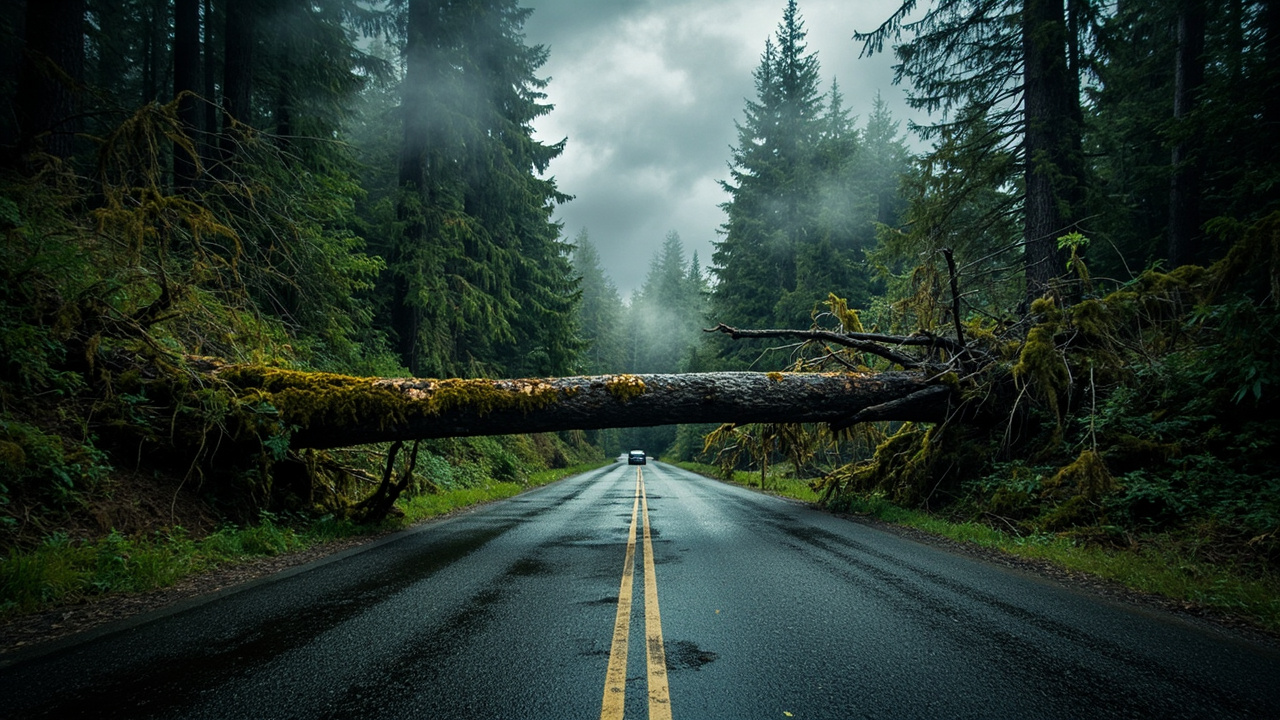
At least a dozen visitors were stranded inside Olympic National Park for more than 20 hours after a powerful storm dropped trees across the park's access roads, blocking escape in both directions. National Park Service crews worked through the night and into the following afternoon before those trapped could finally drive out.
The incident began when strong winds and heavy rain swept across western Washington, felling trees near multiple campgrounds and park entrances. Among those caught inside was Kathleen Hart of San Diego, who was traveling with a friend and had attempted to leave the park when their route along Hoh Road became impassable. According to KOMO News, the pair parked their vehicle and quickly realized that downed trees were blocking the road in both directions, leaving them with no immediate way out.
How the Storm Unfolded
The weather system that struck the park brought not just rainfall but lightning and thunder, compounding the unease for those stuck overnight. Hart told KOMO News that she had not anticipated spending the night in the park: "We didn't realize we'd be spending the night." Her mother, Michele Hart, grew increasingly anxious as hours passed and phone calls went unanswered or were redirected from 911 to park rangers.
KIRO 7 News, citing reporter Jake Chapman, described "downed trees near several campgrounds and entrances" as the primary obstacle slowing rescue efforts. The same storm that shut down park roads also cut electricity to thousands of residents across western Washington, stretching emergency response resources thin across a wide area.
Back inside the park, the stranded visitors were left with what food and water they had on hand. Hart described the group, made up largely of strangers, as resilient: "Everyone has been such good sports and looking out for each other," she said, as reported by KOMO News.
The Rescue Timeline
National Park Service crews began clearing fallen trees and assessing road conditions the morning after the storm hit. According to KOMO News, rangers reached the stranded group by midday. Conditions improved enough by approximately 1:30 PM to allow partial road access, and by 2:00 PM the visitors were able to leave the park on their own.
A park spokesperson confirmed, as reported by KOMO News, that affected areas including Kalaloch and Sol Duc Campgrounds were subsequently reopened after safety assessments were completed. The timeline from first tree fall to final clearance stretched well past the 20-hour mark for those who had been blocked the longest.
KIRO 7 News noted that the broader storm caused widespread disruption across the region, with downed trees affecting local businesses and communities beyond the park boundary, adding to the logistical challenge facing crews trying to restore access.
Why This Terrain Amplifies Risk
Olympic National Park covers nearly one million acres of temperate rainforest, alpine ridgelines, and rugged Pacific coastline. Its road network is limited, and many routes dead-end or loop back through the same corridors — meaning a single downed tree in the wrong location can effectively seal an entire section of the park. The Hoh Rain Forest corridor, where Hart and her companion were stranded, is particularly susceptible: its dense old-growth canopy produces massive trees whose root systems can be undermined by saturated soil during prolonged rain events.
The National Park Service, in its published road-conditions guidance available at the Olympic National Park planning page, notes that road accessibility can change rapidly due to weather and urges visitors to call (360) 565-3131 for current status before entering the park. That advisory takes on fresh urgency given the November storm.
Gear and Planning Lessons from the Incident
The Hart party survived their ordeal without reported injuries, but the outcome could have been more serious had the storm been colder or the wait longer. The experience highlights several concrete preparedness gaps that outdoor visitors should address before entering any remote national park.
First, checking road and weather conditions the morning of departure — not days in advance — matters more in Pacific Northwest parks where weather windows shift in hours, not days. The National Park Service emphasizes this in its visitor planning resources, noting that conditions can deteriorate without warning.
Second, the stranded group's survival comfort depended heavily on sharing whatever food and water individuals happened to carry. KOMO News reported that the visitors pooled their supplies, an improvised solution that worked but is not a strategy. Carrying a minimum of one day's extra food and two liters of water per person, independent of the planned trip length, provides a genuine buffer when exit times become unpredictable.
Third, the repeated difficulty reaching emergency services — calls rerouted between 911 and park rangers — points to the value of having a direct non-emergency contact for the specific park you are entering. For Olympic National Park, that number is (360) 565-3131, as listed in National Park Service materials.
Finally, a battery-powered or hand-crank weather radio lets visitors monitor incoming storm systems even where cellular signals are degraded. Western Washington's storm that night affected power to thousands; cell infrastructure in storm corridors is often the first casualty.
What Travelers Should Do Before Entering Olympic
Based on the response timeline in this incident, anyone planning a multi-hour drive into the park's interior — Hoh, Kalaloch, Sol Duc, or the Elwha corridor — should tell someone outside the park their expected return time and the specific roads they plan to use. That contact becomes the first link in a rescue chain if communication fails.
KIRO 7 News reported that the November storm's effects on park infrastructure were still being assessed after the roads reopened, suggesting that even after a primary clearance, secondary hazards may remain. Traveling slowly, watching for widow-makers, and being willing to turn back are all behaviors that the Hart ordeal argues for directly.
Olympic National Park remains one of the most biodiverse and visually striking destinations in the American West. The storm that trapped more than a dozen visitors was a reminder, reinforced by KOMO News and KIRO 7 News coverage, that its scale and isolation demand preparation commensurate with the terrain.
Sources referenced
- Several people stranded in Olympic National Park for 20+ hours due to weather, downed trees – KOMO News (https://komonews.com/news/local/several-people-stranded-in-olympic-national-park-for-20-hours-due-to-weather-down-trees-storm-rain-winter-dangerous-family-safety-hiking-biking-camping-traffic-cars-police-rangers-rescue)
- Downed trees during Saturday's storm traps visitors inside Olympic National Park – KIRO 7 News (https://www.kiro7.com/news/local/downed-trees-during-saturdays-storm-traps-visitors-inside-olympic-national-park/4H5XUN6X4VDLRHGKHBRSAURA6U/)