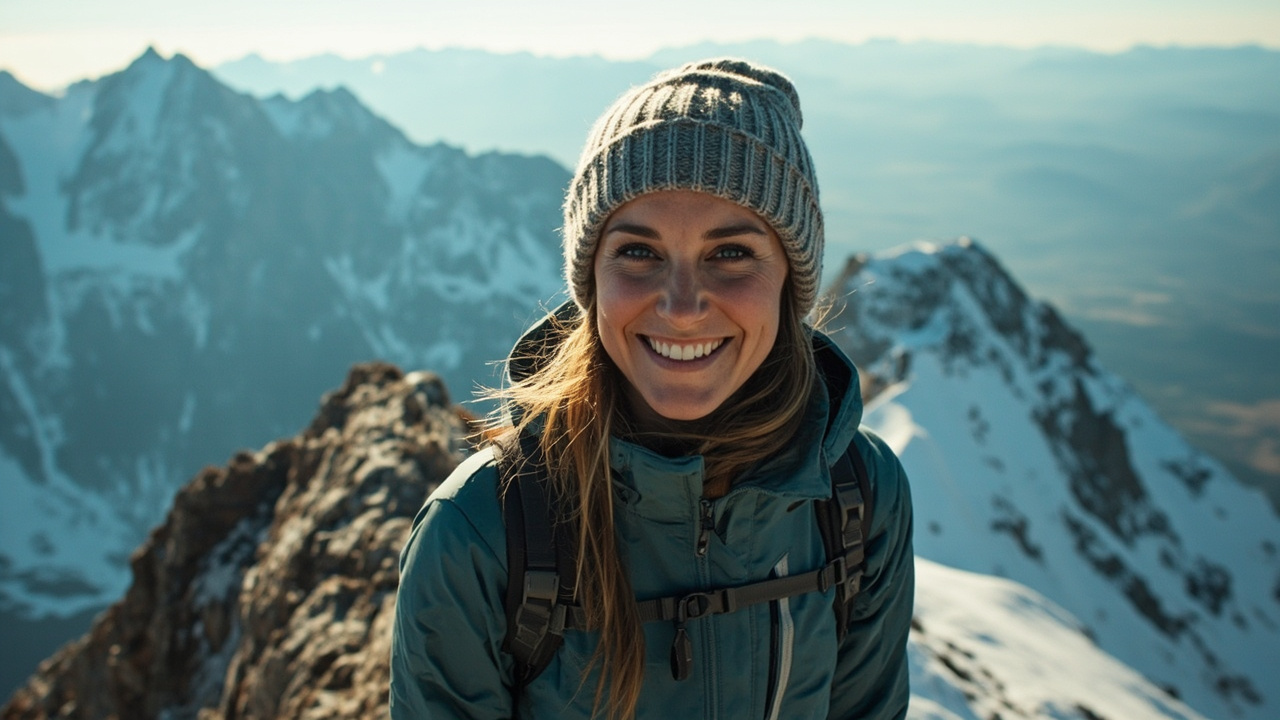
The Real Lesson From Princess Kate's Publicized Solo Hike
TL;DR: No responsible solo mountain hike should happen without a safety plan, communication devices, and ideally a trained support team nearby—exactly the setup Princess Kate used, regardless of how it was publicly framed.
In early 2025, images and reports of Princess Catherine (Kate Middleton) completing what Kensington Palace promoted as a personal solo mountain hike generated significant public attention. However, reporting quickly surfaced revealing that the hike was never truly solo: a dedicated mountain rescue team accompanied her for safety, and members of her family waited at the base of the mountain. Far from undermining the achievement, this setup actually reflects the gold standard of responsible solo hiking—and it offers every outdoor enthusiast a clear model to follow.
Whether you're summiting a Scottish peak or heading into the Appalachian backcountry for the weekend, the gap between a "solo" hike and a "safe solo" hike is filled with gear, planning, and support systems. Kate's approach—however it was framed publicly—mirrors exactly what mountain safety experts recommend.
What 'Solo Hiking' Actually Means in Practice
The term "solo hiking" describes heading into the wilderness without a primary hiking partner walking beside you step-for-step. It does not mean cutting all ties with civilization and abandoning every safety net. In fact, the most experienced solo hikers in the world—from thru-hikers on the Pacific Crest Trail to alpine climbers in the Alps—rely on layered safety systems.
According to the Mountain Rescue Association (MRA), which coordinates search and rescue operations across the United States, the majority of solo hiker rescues involve people who either failed to file a trip plan, carried no emergency communication device, or underestimated terrain and weather. The MRA's annual statistics consistently show that preventable incidents account for a significant share of call-outs each year. (Mountain Rescue Association, mra.org)
Princess Kate's setup—a professional mountain rescue team on standby, family at the trailhead, and presumably a full communication chain—is precisely what safety experts call a "supported solo," and it is the responsible way to attempt any serious mountain hike as a non-expert.
The Mountain Rescue Team: Your Most Underrated Safety Asset
In the United Kingdom, mountain rescue teams are voluntary, highly trained organizations that operate in partnership with local police forces. Teams such as those operating in Snowdonia, the Lake District, and the Scottish Highlands train year-round in technical rope rescue, casualty care, navigation in zero-visibility conditions, and helicopter coordination.
According to Mountain Rescue England and Wales (MREW), volunteers completed over 3,600 incidents in 2023 alone, with a significant portion involving walkers on well-marked trails who simply became injured or lost. (Mountain Rescue England and Wales, mountain.rescue.org.uk)
Having a mountain rescue team shadowing a high-profile hike is not unusual for VIP security contexts—but the practice also underscores a principle every hiker should internalize: knowing where rescue resources are, how to contact them, and how quickly they can reach you is not optional information. Before any mountain hike, look up the local mountain rescue team's contact number and save it in your phone alongside the standard emergency services number.
Essential Gear for a Safe Solo Hike
The same gear matrix that protects an unaccompanied hiker on a remote ridge would have been standard kit on Princess Kate's team, regardless of press framing. Here is the non-negotiable list:
1. Personal Locator Beacon (PLB) or Satellite Communicator
A Personal Locator Beacon (PLB) sends a distress signal to COSPAS-SARSAT satellites, alerting rescue coordinators to your GPS position. Devices like the ACR ResQLink 400 ($269 MSRP as of 2024) require no subscription and are globally recognized by rescue services. Satellite communicators such as the Garmin inReach Mini 2 ($349 MSRP) go further, allowing two-way text messaging with family or a base contact—exactly the kind of check-in system that keeps a "solo" hike connected to a support chain.
2. Layered Navigation: Map, Compass, and GPS
Electronic GPS devices fail in cold, wet conditions. Carrying a waterproofed 1:25,000 OS map (or equivalent USGS topo map in the US) alongside a quality baseplate compass such as the Suunto A-10 ensures you can navigate when batteries die. Navigation failure is one of the leading causes of mountain rescues in the UK, according to MREW annual incident reports.
3. Emergency Bivouac Shelter
A bivouac bag or emergency shelter weighing under 200 grams—such as the SOL Escape Bivvy—can prevent hypothermia during an unplanned night out. In mountainous terrain, weather can deteriorate faster than a descent is possible. This single item has saved lives on peaks across Scotland, Norway, and the Pacific Northwest.
4. First Aid Kit Calibrated to Terrain
A solo hiker's first aid kit must cover the specific risks of the terrain: blister management, sprain support (elastic bandage, SAM splint), wound closure, and hypothermia mitigation (space blanket, chemical hand warmers). Kits like the Adventure Medical Kits Ultralight & Watertight .7 are purpose-built for this weight-to-coverage ratio.
5. Communication Plan With a Named Contact
Leave a written trip plan with a named, reliable contact who knows when to call mountain rescue if they haven't heard from you. Include your planned route, expected return time, vehicle registration at the trailhead, and the local mountain rescue number. This is the "family waiting at the bottom of the mountain" principle—formalized and made actionable.
Trip Planning: The Discipline That Separates Incidents From Adventures
Mountain rescue professionals universally cite poor planning as the root cause of most preventable incidents. Effective trip planning for a solo mountain hike involves five elements:
- Weather window: Check forecasts from specialist mountain weather services (e.g., MWIS in the UK, Mountain Forecast internationally) no more than 24 hours before departure.
- Route assessment: Match the route's technical grade and distance to your current fitness level, not your aspirational fitness level.
- Turn-back time: Set a firm turn-back time before you leave the trailhead. Many summit accidents happen to hikers who push past their scheduled turnaround point.
- Curfew notification: Tell your base contact exactly when to call for help if you haven't checked in.
- Gear audit: Run through your kit against a printed checklist the evening before, not in the parking lot.
These five steps require no specialized equipment and cost nothing—yet they represent the single highest-impact investment a solo hiker can make.
What High-Profile Hikes Get Right (And What Media Coverage Gets Wrong)
Public interest in celebrity outdoor activities has a genuine upside: it motivates people to attempt hikes they might otherwise never consider. The British hiking charity Ramblers reported a sustained increase in trail registrations and membership following increased media coverage of outdoor activities during and after the COVID-19 pandemic, citing a broader cultural shift toward connecting with nature on foot.
The downside is that edited, curated images of "solo" mountain experiences rarely show the planning, safety infrastructure, or support teams that made those experiences possible. New hikers who attempt to replicate a dramatic summit photo without the underlying safety architecture are precisely the people who end up in mountain rescue statistics.
The honest framing—"I hiked this peak with a safety team on standby and a support network at the base"—is not a lesser achievement. It is a smarter one. It is, in fact, the model every solo hiker should aspire to replicate at their own scale.
Building Your Own 'Mountain Rescue Team'
Most hikers cannot afford a dedicated mountain rescue escort. But every hiker can build a functional equivalent:
- Digital check-in partner: A friend or family member who tracks your inReach or Garmin GPS share link in real time.
- Trail registration: Many national parks and wilderness areas offer voluntary trail registration systems that automatically trigger welfare checks.
- Hiking community contacts: Local hiking clubs often run buddy systems for solo members heading into remote terrain.
- Downloaded offline maps: Apps like Gaia GPS or OS Maps allow full offline navigation even without cell service.
The Princess Kate hike, stripped of its public relations framing, is actually a useful template: know your terrain, bring professionals if the stakes are high, keep family or trusted contacts informed, and never treat "solo" as synonymous with "unsupported."
Final Word: Solo Hiking Done Right Is a Supported Activity
Solo hiking is one of the most rewarding forms of outdoor experience—the self-reliance, the quiet, the unmediated relationship with terrain. But self-reliance does not mean self-isolation. The most capable solo adventurers in the world—from fell runners in the Lake District to desert ultramarathoners in the Sahara—maintain robust communication systems, file detailed trip plans, and know exactly who will come looking for them and when.
The next time you head into the mountains alone, ask yourself: does your safety architecture look more like a properly supported solo, or like a social media photo waiting to become a mountain rescue statistic? The gear, the planning, and the named contact at the bottom of the hill are not signs of weakness. They are the whole point.