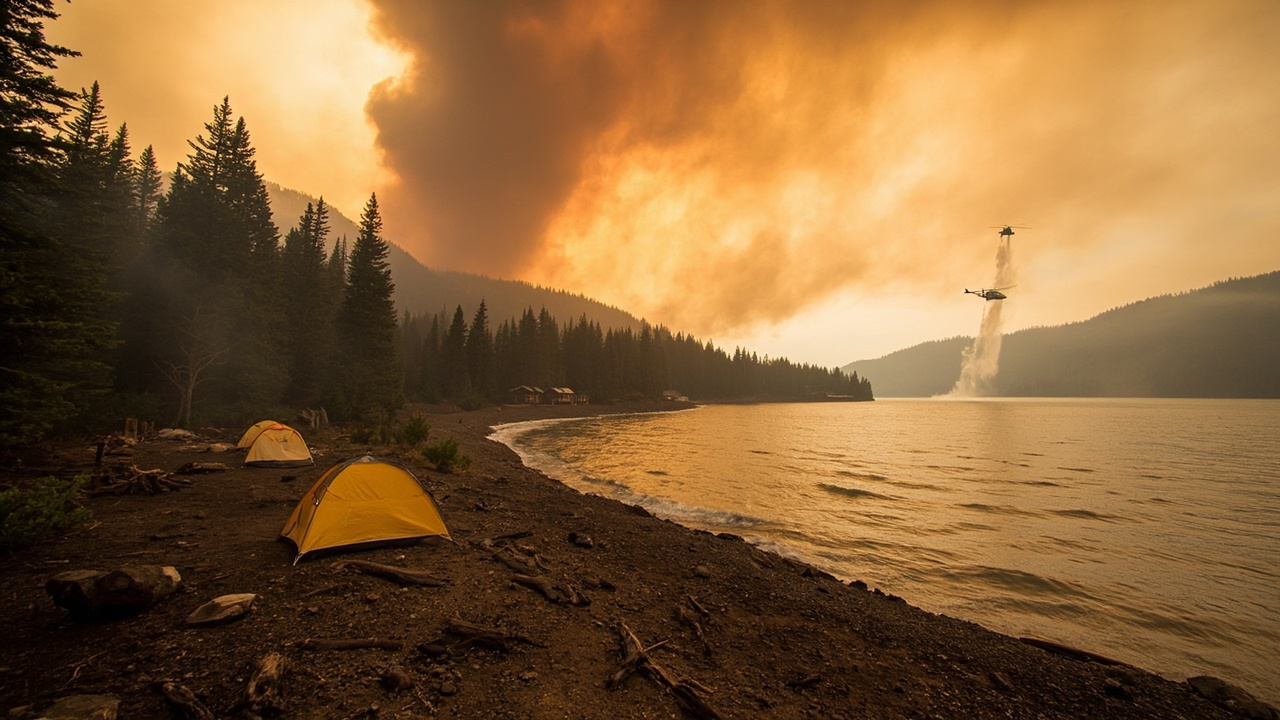
TL;DR: A Marine F/A-18 Hornet crashed during training near Rimrock Lake on June 13, 2026, the pilot ejected safely, and the impact started the 2-acre Pine Tree Fire that closed roads and forced campground evacuations.
Crash Confirmed During Midday Training
A military jet assigned to San Diego crashed beside Rimrock Lake on Saturday afternoon, June 13, 2026, and ignited forest vegetation on impact.
Officials with Marine Corps Air Station Miramar, California, identified the jet as an F/A-18 Hornet fighter and described the event as a nonfatal mishap that occurred around 12 p.m. during training near the lake, according to reporting in Fighter jet made 'popping sounds' before crashing, sparking wildfire near Mt. Rainier.
The same report stated that the cause was under investigation and that military officials had not released a determination on Saturday.
Additional detail in Wildfire ignites after military aircraft crash near Rimrock Lake identified the operator as Marine Aircraft Group 11, 3rd Marine Aircraft Wing, citing U.S. Marine Corps Station Miramar.
That report quoted a Marine Corps statement saying the cause of the mishap was under investigation, that no added details were available to preserve the integrity of the inquiry, and that mishap investigations can require several months depending on various factors.
For backcountry travelers, the core lesson is direct: a routine recreation day can change because of an aviation emergency overhead, even without any wildfire already burning in the area.
Yakima County response began quickly, with fire crews dispatched to a down military aircraft in the Rimrock Lake area on Saturday afternoon.
Pilot Ejected Before Impact
The pilot left the aircraft before it struck terrain and survived.
First responders reported that the pilot ejected safely from the fighter before the crash and was taken for care with minor injuries at a nearby medical facility.
Naches Fire reported that the pilot was transported to a hospital after escaping the aircraft, without releasing further detail on condition or treatment on Saturday.
The Yakima County Sheriff's Office reported minor injuries and said the pilot was transported to a nearby hospital for medical treatment and assessment.
Recovery involved sheriff's personnel, while Naches Fire personnel assisted with transport, based on the Saturday incident accounts.
No other injuries were reported in the accounts published by the cutoff for this archive report.
For prepared adventurers, the takeaway is to expect medical and law-enforcement activity around any aircraft crash site and to stay clear so crews can reach survivors and secure hazards.
Pine Tree Fire Starts At Crash Site
The impact started a wildland fire on the southern side of Rimrock Lake.
Crews named the blaze the Pine Tree Fire, and the National Interagency Fire Center listed it at two acres in its 9:00 p.m. listing on Saturday.
There was no estimate on containment at that time.
The fire was described as burning just off Forest Road 1241 in timber near the lake.
Naches Fire Department said the crash ignited wildfire in surrounding woods and that personnel were actively working to suppress it on Saturday afternoon and evening.
No additional confirmed size or behavior information beyond the two-acre listing was available in the Saturday reports.
Avoid the immediate burn area because aircraft wreckage, fuel, unstable trees, and active suppression work create risks beyond flame and smoke.
Helicopters And Ground Crews Respond
Suppression combined air and ground resources from local and federal agencies.
Naches Fire Department officials said helicopters and at least one engine from the Okanogan-Wenatchee National Forest crew were suppressing the fire on Saturday.
Reporting in Wildfire ignites after military aircraft crash near Rimrock Lake likewise described helicopters and at least one engine from the U.S. Forest Service's Okanogan-Wenatchee National Forest as involved in firefighting operations.
Aerial resources were dispatched in addition to ground crews, and air support continued attacking the fire into the evening.
A department water tender remained at the fire through the afternoon, with fire officials saying it would likely remain on scene through the afternoon and return the next morning to support mop-up work.
The follow-up plan described Sunday morning mop-up operations to prevent reignition, with Naches units expected to return to assist.
Military agencies were notified of the incident, and the Yakima County Sheriff's Office said they will be sending their people and resources, with law enforcement to share more information when available.
Give hose lays, engines, tenders, and helicopter dip and drop zones wide clearance and never park where you block a forest road.
Campers Evacuated, Roads Closed
Recreation access south of the lake was shut down Saturday as crews worked.
Fire officials closed the road system off FR 1200 on the south side of Rimrock Lake for safety, and the 1200 Road system on the south side was reported closed during evacuations.
Multiple law enforcement agencies evacuated campers from the area, and Naches crews reported evacuating a nearby campsite and clearing the scene.
By mid-afternoon, campers were being moved out while closures were put in place, with one account placing evacuations underway by 4:45 p.m.
Officials said the area should be avoided until further notice, and in a Saturday evening update fire officials stated the area should be avoided for the foreseeable future.
That direction matters for trip planning: cancel or reroute lake access, dispersed camping, and trailhead plans tied to the south-side road network until agencies reopen it.
Keep a full tank, paper map, and alternate exit route for Rimrock and White Pass travel, because a single road closure can change evacuation options.
Bear Creek Cabins Protected
Structure protection focused on cabins near Bear Creek.
Naches Fire units completed structure protection efforts near the Bear Creek cabins before clearing the scene on Saturday.
A separate account placed completion of Bear Creek Cabins protection at around 4 p.m. on June 13, with crews then continuing fire attack into the evening.
The department reported that its units protected structures of cabins near Bear Creek, then cleared the immediate scene while the tender remained available for continued support.
No structure loss was reported in the information published by the archive cutoff.
Do not enter closed cabin tracts, summer-home areas, or structure-protection zones to check conditions, because engines and crews need road access and falling debris may remain.
What Witnesses Heard And Saw
Two lakeside witnesses described unusual sounds and smoke before the crash.
Tina Liniger, who was watching training flights from lakeside, said several jets had already passed over the lake when another aircraft approached making popping sounds.
She said observers initially thought the noise was normal air noise from the jet, then walked to the lakefront and saw smoke.
Marissa Fernandez, who was watching aircraft with family, said the jet began smoking in mid-air, descended, and struck trees.
She said observers saw the pilot eject and hoped the pilot landed safely.
Those accounts align with the official description of a midday training mishap followed by ejection, crash, and fire start.
If you hear abnormal aircraft noise or see smoke and descending wreckage, move away from the flight path, take cover from falling debris, and report a precise location once safe.
Where This Happened
The crash and fire occurred in a heavily used recreation corridor south of Mount Rainier.
The 2,546-acre Rimrock Lake reservoir sits along Highway 12 about 10 miles east of White Pass within the Okanogan-Wenatchee National Forest.
The reservoir lies about halfway between Mount Rainier National Park and Yakima, placing it within easy weekend range for campers, hikers, anglers, and snow-sport users.
The region contains dozens of dispersed and established campsites, snow sports opportunities, and hiking and backpacking routes.
The Pacific Crest Trail crosses White Pass a few miles from where crews responded, underscoring how quickly a local closure can affect long-distance hikers and section travelers.
Check Forest Service and sheriff channels for the 1200-road system, Forest Road 1241, and campground status before driving to Rimrock Lake.
What Backcountry Visitors Should Do Next
Treat this incident as a reminder that wildfire can start suddenly near camp, even when the ignition is an aircraft crash rather than lightning or a campfire.
Have a go-bag ready with water, food, first-aid supplies, headlamp, warm layer, phone charger, and vehicle keys so a campground evacuation order can be followed immediately.
Park facing the exit, keep tents and gear packed for rapid loading, and know the route out without relying only on a phone map.
Follow instructions from firefighters and deputies during camper evacuations and leave when told, rather than waiting to see smoke growth.
Monitor official updates from Naches Fire Department, the Yakima County Sheriff's Office, the Okanogan-Wenatchee National Forest, and the National Interagency Fire Center for fire size, containment, road status, and mop-up progress.
Expect investigators and military personnel and resources in the area, and do not approach wreckage or collect debris because an investigation is underway and hazards may remain.
Revisit White Pass and Rimrock Lake plans frequently, since mop-up operations, investigation activity, and road closures can extend beyond the initial response day.