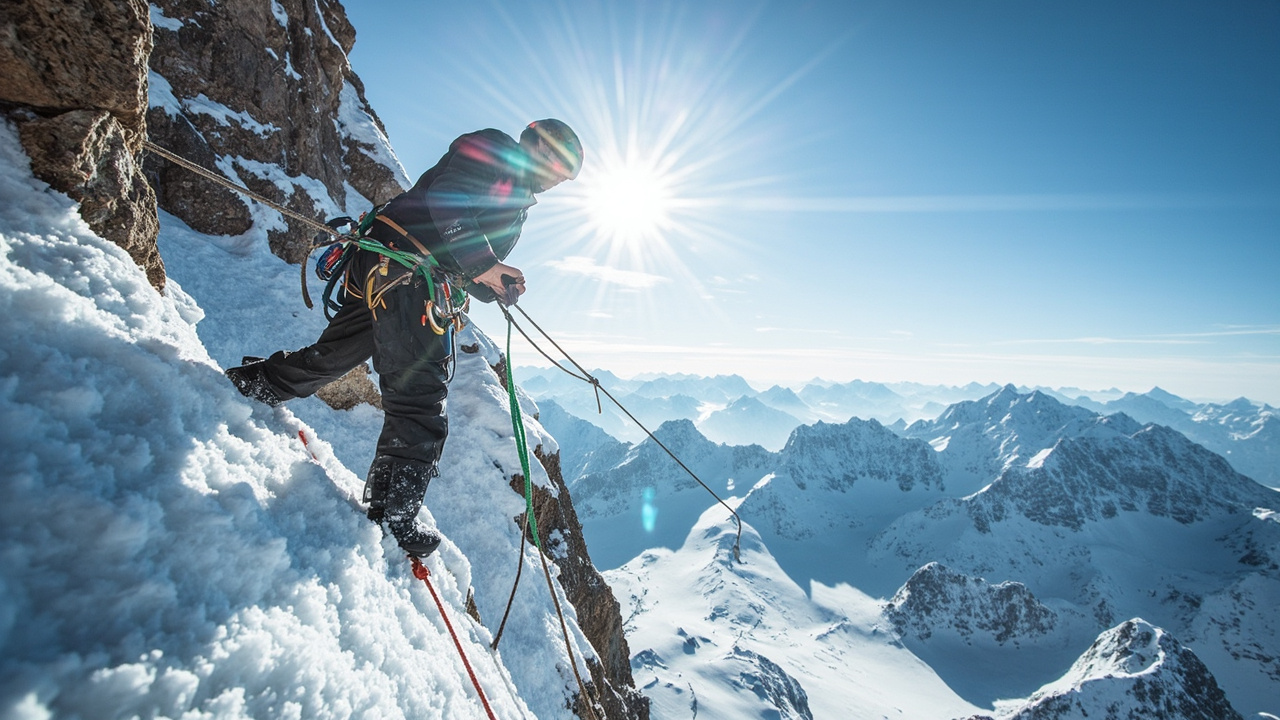
Anchor Failure Killed Two Prepared Climbers — Investigation Confirmed
A failed rock anchor caused the deaths of Colorado Mountain College students Kaden Matsuda and Jackson Donlon during a rappelling descent on West Apostle Mountain in Chaffee County, Colorado. The Chaffee County Sheriff's Office and Coroner's Office announced their joint investigative finding on November 3, 2026, according to AP News.
The conclusion is notable precisely because investigators found no obvious error to criticize. Sheriff Andy Rohrich stated, as quoted by AP News, "In most similar cases that have led to a devastating conclusion, we find it easy to pick apart what was done wrong. That was not the case with Kaden and Jackson."
What Happened on October 23–28, 2026
Matsuda, 19, and Donlon, 20, departed from Colorado Mountain College's Leadville campus on October 23, 2026, originally intending to summit Ice Mountain. The pair redirected their objective to West Apostle Mountain, which rises to 13,597 feet. During the descent by rappel, Donlon was positioned at the primary anchor when it failed, sending both climbers down a significant distance, according to AP News.
Search and rescue teams recovered both bodies on October 28, 2026, from a snow-filled basin on the mountain's flanks. A heavy snowstorm had moved through the area during the period they were missing, dropping as much as two feet of snow. That storm complicated recovery operations but was ruled out as a contributing factor to the accident itself.
Autopsy Results: Instantaneous Blunt Force Trauma
Autopsies confirmed that Matsuda and Donlon each suffered multiple blunt force injuries and died instantly upon impact, according to AP News. The medical findings aligned with the physical evidence gathered at the scene: a sudden, uncontrolled fall triggered by the anchor's failure rather than a gradual series of survivable events.
Sheriff Rohrich acknowledged the dual weight of the determination, noting — as reported by AP News — that there was some relief in knowing neither student suffered, even as the loss remained devastating for families and the broader climbing community.
Their Equipment and Preparation
The investigation found that the two students carried a standard set of climbing safety hardware, including a piton and a secondary rock anchor as a backup system in addition to the primary anchor that failed, according to AP News. Outside Online reported that both Matsuda and Donlon were pursuing outdoor-focused academic paths: Matsuda had aspirations of becoming a wildland firefighter, while Donlon was working toward outdoor leadership credentials.
That context matters for the safety analysis. The climbers were not weekend tourists attempting a technical descent unprepared. They had relevant training, relevant gear, and a redundancy system in place. The anchor still failed.
Why the Cause Remains Undetermined
Investigators confirmed the anchor failed but have not determined precisely why it failed, according to AP News. Rock quality, micro-fractures invisible during placement, and extreme cold can all compromise an anchor that appears sound. No single identifiable error — improper placement technique, substandard hardware, or negligent inspection — has been cited as the definitive trigger.
That uncertainty carries a direct lesson for climbers operating at elevation in Colorado and comparable alpine environments: an anchor's visible appearance and even its resistance to an initial load test cannot guarantee it will hold under a full rappelling load, particularly when rock is cold, wet, or structurally compromised beneath the surface.
What Climbers Can Take From This Incident
The Chaffee County investigation does not point to a single fixable mistake, which makes the incident harder to frame as a simple cautionary tale but arguably more important for the climbing community to study carefully.
Several concrete procedural considerations emerge directly from the documented facts of this case.
Redundancy has limits. Matsuda and Donlon carried backup anchors. The failure occurred at the primary point before the backup could serve its protective function. Building in redundancy is essential but does not eliminate risk entirely when the primary anchor is the loaded point of contact during a fall.
Rock quality at altitude is variable. West Apostle sits above 13,500 feet. At that elevation, freeze-thaw cycles work repeatedly on rock surfaces and sub-surface fractures, and a placement that holds in summer may behave differently in late October conditions.
Descent decisions carry compounding variables. The team originally planned to summit Ice Mountain and redirected mid-trip. Changing objectives at elevation means entering terrain that may not have been scouted in advance and assessing anchor placements with less familiarity.
Investigation language matters. Sheriff Rohrich's statement — that investigators found it difficult to identify what was done wrong — is a rare and significant assessment from a law enforcement official reviewing a fatal climbing incident. It reinforces that fatal outcomes can occur even when climbers follow established protocols.
Community Response
Outside Online reported that tributes for Matsuda and Donlon spread across the climbing and outdoor education communities following the recovery of their bodies. Colorado Mountain College's Leadville campus, where both were enrolled, became a focal point for remembrance. The college has not publicly announced specific institutional responses tied to the investigation's findings.
Sheriff Rohrich's full statement, as reported by AP News, closed with a note that while their lives were too short, Matsuda and Donlon "spent their final moments together surrounded by the majestic beauty of Chaffee County's high peaks that they loved."
What Investigators Concluded
The Chaffee County Sheriff's Office and Coroner's Office closed the investigation with anchor failure as the established cause of the fatal fall. No weather fault, no gear negligence, and no procedural failure have been identified as the root cause. No further investigation has been announced. For the climbing community, the finding is both a formal record and an open technical question: what specifically failed in that anchor, and under what conditions can the same failure occur again.
Sources referenced
- AP News: Missing college hikers Colorado autopsy (https://apnews.com/article/missing-college-hikers-colorado-autopsy-86c26a4566fc96095e8a0a96f05b6fca)
- Outside Online: Colorado Mountain College Climbers Cause of Death (https://www.outsideonline.com/outdoor-adventure/exploration-survival/colorado-mountain-college-climbers-cause-of-death/)