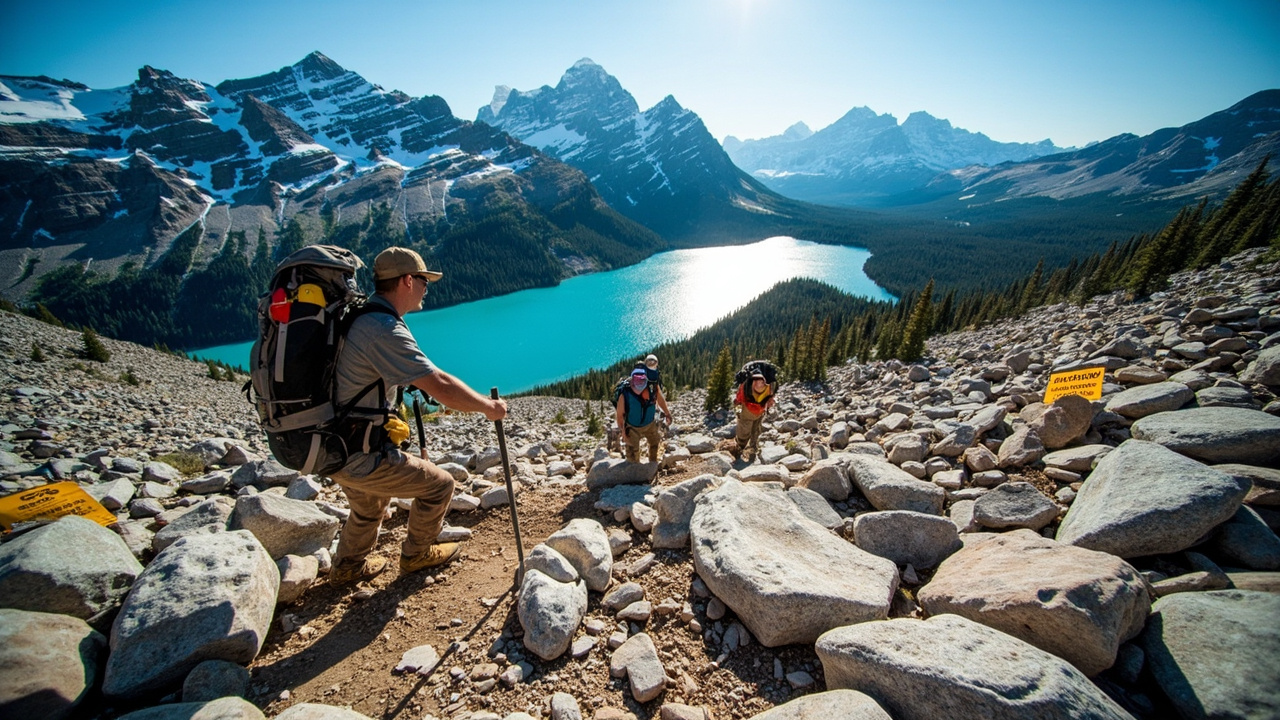
TL;DR: Restoration and improvement work on the unofficial Delta Lake route via Lupine Meadows Trailhead in Grand Teton National Park was set to begin in late June 2026 and continue through early August, with hikers facing delays, work zones and short reroutes.
Work window opens on a heavily traveled alpine route
Hikers heading to Delta Lake this summer should expect active construction zones along the approach, according to the National Park Service news release titled "Trail improvement work will begin in late June on Delta Lake route in Grand Teton National Park."
The announcement, dated June 25, 2026, said Access Fund crews would work in partnership with Grand Teton trail crews beginning in late June and continuing through early August. The location is the unofficial but widely used route to Delta Lake via the Lupine Meadows Trailhead near Moose, Wyoming.
A companion schedule from the Teton Climbers' Coalition placed the larger restoration effort from June 29 through August 6. The report in Buckrail titled "Restoration work to begin next week on popular Delta Lake trail in GTNP," published June 26, 2026, described the same late-June to early-August window and said work would continue over the next couple of months.
The project was presented as restoration and improvement rather than new construction. Park managers said visitors should plan for temporary delays and allow additional time, a point repeated in both the federal announcement and local coverage.
Why Delta Lake was selected for repair
Delta Lake has seen a sharp rise in visitation in recent years, resulting in braided social trails, erosion and damage to vegetation in sensitive alpine terrain, according to the National Park Service.
Buckrail reported that the lake has received substantial attention on social media over the last few years and experienced a dramatic increase in visitation. The Teton Climbers' Coalition likewise described Delta Lake as one of the park's most heavily visited backcountry destinations.
The stated goals are to improve visitor safety, reduce erosion, protect sensitive alpine vegetation and create a more sustainable and intuitive route, while maintaining the adventurous character of the hike, according to the National Park Service.
Superintendent Chip Jenkins said the effort would help protect the Delta Lake area while maintaining the backcountry experience visitors value, as quoted in the park release and in Buckrail. Grand Teton National Park Foundation President Leslie Mattson called Delta Lake one of the park's most popular destinations and described the project as an investment in the visitor experience and fragile alpine environment.
For backcountry travelers, the underlying message is familiar: when many boots leave the single tread, parallel paths form, soils loosen and alpine plants lose cover. Here, managers linked those patterns directly to the Delta Lake approach.
A record rescue season adds urgency for hikers
The trail project arrives during an unusually demanding early season for rangers around Delta Lake. Five hikers had been rescued from Delta Lake so far this year by June 23, more than ever recorded at the trail by that date, according to the Jackson Hole News&Guide article titled "Teton park has rescued a record 5 people from Delta Lake so far this year."
Nick Armitage, a supervisory ranger for the Jenny Lake District, described the route as travel over loose, steep terrain on an unmaintained trail, with added hazard particularly for slips, trips, falls and ankle rolls, as quoted in that report.
In three of the five rescues, hikers were airlifted by a Teton County Search and Rescue helicopter, the newspaper reported. Visitors were not seriously injured and mainly suffered leg injuries, but rescues there remain challenging.
Armitage said complications often arise because of weather, wind and other challenges, and noted that even a simple injury can become more serious if untreated or if someone is stuck out overnight.
For context, the News&Guide reported two rescues by the same point in both 2024 and 2025, and none through mid-June in 2022 and 2023. Since 2014, only three years have finished an entire summer with more than five rescues at Delta Lake.
The newspaper also reported that visitation growth over the last decade has been driven in large part by popularity on Instagram and TikTok, with officials aware that some visitors rely on social media or artificial intelligence for trip advice. Park spokesperson Emily Davis encouraged people to check current conditions before starting a hike and said visitor centers and ranger stations have the most up-to-date information.
The News&Guide cited one TikTok account that described a recent fall, a severe sprain and a helicopter evacuation characterized as the only way off the mountain. Armitage said the established route is an extremely difficult place to carry a non-ambulatory person and that the helicopter is often the right tool for the safest rescue there.
What work crews will actually build
The field work will focus primarily on defining a path through heavily impacted sections, including the boulder field leading to Delta Lake, according to the National Park Service.
Planned improvements listed by the park include better wayfinding, erosion mitigation, trail stabilization and rehabilitation of social trails contributing to resource damage.
The Teton Climbers' Coalition said volunteers would assist with closing and restoring user-created social trails, delineating the preferred access route and installing retaining structures intended to protect fragile alpine terrain from further degradation.
Importantly for route-planning, the park does not intend to convert the unofficial path into a heavily engineered route or designate it as an official trail, according to the Jackson Hole News&Guide. Instead, the collaboration with the Teton Climbers' Coalition and Access Fund is aimed at subtle improvements, such as physical cues to point people in the right direction.
That distinction matters for preparedness. Hikers should not expect a graded, fully maintained trail after the project. They should expect a clearer line through difficult ground, fewer confusing branches and more stable footing in treated spots.
Delays, reroutes and trail etiquette around crews
Visitors may encounter temporary delays, short reroutes, work crews and equipment in project areas during active construction days, according to the National Park Service.
Hikers are encouraged to follow all posted signage, respect work zones and allow extra time when visiting the area. Buckrail repeated that guidance, urging hikers to follow signage, respect work zones and allow extra time.
On narrow or loose sections, the practical steps are straightforward: stop where directed, give crews room to move rock and tools, avoid stepping around barriers onto revegetation areas, and keep groups together through reroutes.
Because the route includes steep and uneven ground, passing or shortcutting a work zone can damage fresh work and increase fall exposure. Waiting briefly and using the marked line helps preserve both safety and the restoration investment.
Who is leading and funding the project
The project is led by Access Fund in partnership with Grand Teton National Park and funded by Grand Teton National Park Foundation, according to the National Park Service.
The Teton Climbers' Coalition will coordinate a volunteer workday in support of the project later in the summer, the park said. Buckrail listed the supporters as Access Fund, Grand Teton National Park Foundation, Teton Climbers Coalition and AllTrails.
Grand Teton National Park Foundation received a grant from AllTrails to help advance restoration and sustainable recreation improvements at the destination, according to the park release. Pitt Grewe, head of social and environmental impact at AllTrails, said protecting heavily loved places as more people go outside is the kind of investment public lands deserve.
Andrea Hassler, director of stewardship and education at Access Fund, said improving trails and restoring impacted areas helps protect sensitive alpine ecosystems while allowing responsible visits to continue. Christian Beckwith, executive director of the Teton Climbers' Coalition, said the project shows what outdoor recreation and land-management groups can accomplish together in service of stewardship.
More background is available through the foundation's trails page at gtnpf.org/trails, as listed in the park announcement.
Volunteer workday on July 25
The Teton Climbers' Coalition and Access Fund Conservation Team invited volunteers to an Adopt-a-Crag stewardship project at Delta Lake on Saturday, July 25, 2026, according to the coalition post titled "Access Fund, TCC Invite Community to Help with Delta Lake Trail Project."
Participants were instructed to meet at 8:00 a.m. at the Grand Teton National Park Trail Shop at 200 Pine Marten Drive in Moose, Wyoming, then shuttle to the Lupine Meadows Trailhead. The workday was scheduled to conclude at approximately 3:00 p.m.
The coalition said no park entrance fee is required for registered volunteers. All volunteers must complete the Access Fund volunteer waiver and Code of Conduct before participating.
The work is physically demanding and may involve carrying rocks and materials weighing between 50 and 100 pounds, working on uneven terrain and exposure to varying mountain weather, according to the announcement. Volunteers were told to wear closed-toe footwear and bring water, snacks and extra layers for a full day of trail work.
Those unable to attend July 25 may have weekday opportunities during the project period and were encouraged to contact the Access Fund Conservation Team. The coalition listed [email protected] for information and noted that the Adopt-a-Crag program brings climbers and land managers together to care for climbing areas and public lands.
How to plan a Delta Lake hike during construction
Check current conditions at a visitor center or ranger station before starting, the advice emphasized by park spokesperson Emily Davis in the Jackson Hole News&Guide. Social posts and automated trip advice may not reflect snow, active work areas or closures.
Start early enough to absorb a delay without rushing descent over loose rock. The park's call to allow extra time is especially relevant where crews control passage or where a short reroute adds distance.
Wear sturdy, closed-toe footwear with ankle support, carry water, food and extra layers, and be ready for changing mountain weather. The volunteer equipment list from the Teton Climbers' Coalition — closed-toe footwear, water, snacks and extra layers — is a useful minimum reminder for anyone entering the same terrain.
Stay on the delineated route, avoid widening braided sections and do not stack new cairns or create alternate lines through the boulder field. Trail crews will be trying to consolidate traffic onto a more sustainable alignment.
Park staff also pointed to other summer options, including maintained trails to Surprise and Amphitheater lakes, while advising readiness for snow. Armitage said snow persisted about 500 feet below Surprise Lake, according to the News&Guide.
Anyone uncertain about steep, loose, unmaintained travel should choose a maintained trail instead. Delta Lake will remain rugged by design, even after restoration.