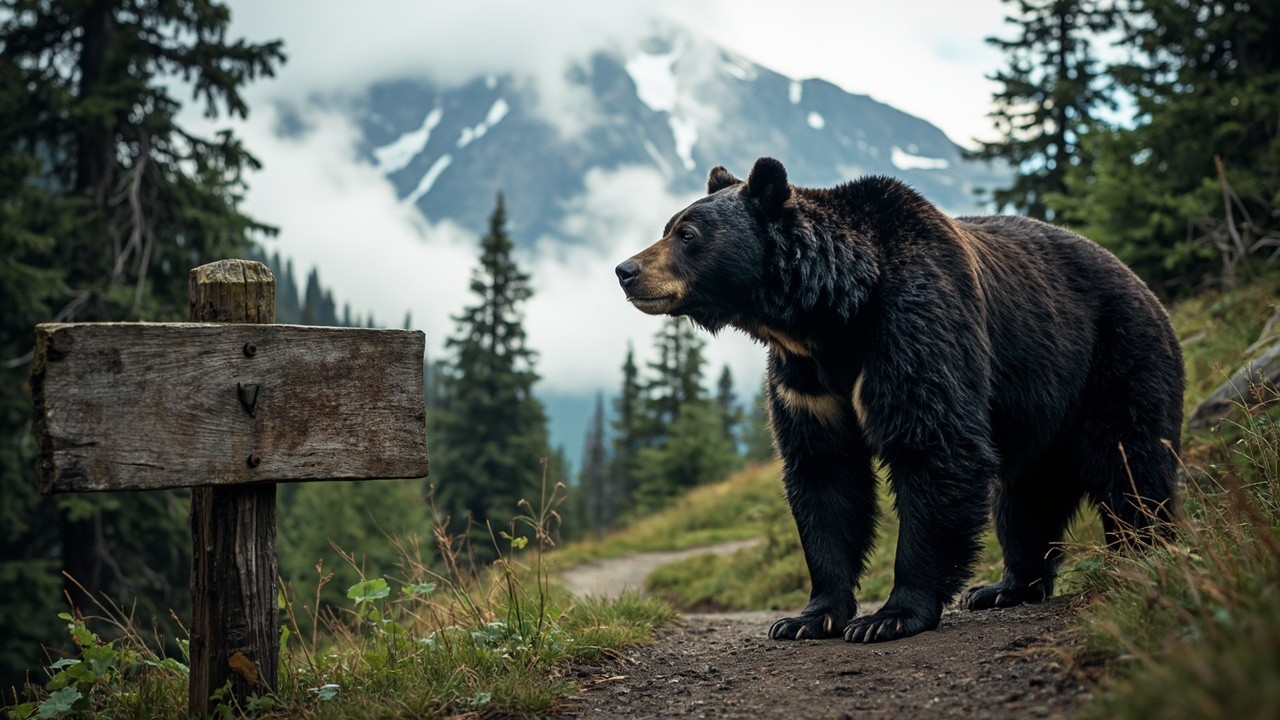
TL;DR: Mount Rainier National Park temporarily closed the Wonderland Trail between Narada Falls Trail and Stevens Canyon Road on May 22, 2026, because of “unusual bear activity,” with no reopening date announced.
Closure Announced Ahead Of Holiday Weekend
The National Park Service issued an alert closing part of the Wonderland Trail because of “unusual bear activity,” according to The Seattle Times. The Seattle Times published its report at 6:57 a.m. on May 22, 2026, in a story by Kai Uyehara. The closure arrived just as Memorial Day weekend approached, a period when backcountry use around Mount Rainier typically increases.
A separate report from Kitsap Sun placed the closure action on Friday and timed its own publication at 11:10 a.m. PT on May 22, 2026, in a story by Zachary Fletcher. The report cited a National Park Service alert as the basis for the closure. KING 5, reporting from Ashford, Washington, also described the closure as temporary and attributed the action directly to the park.
The park did not describe what made the bear activity unusual. According to The Seattle Times, the National Park Service did not specify the exact behavior behind the designation. The agency also did not provide a timeline for reopening the closed section, according to The Seattle Times. KING 5 likewise reported the closure without listing an end date.
Exact Section Closed On The Wonderland Loop
The closed section sits between Narada Falls Trail and Stevens Canyon Road, according to The Seattle Times. Kitsap Sun described the same limits as Narada Falls Trail to Stevens Canyon road. KING 5 identified the same two endpoints for the closure.
The Wonderland Trail is a 93-mile route that encircles Mount Rainier, according to The Seattle Times. Kitsap Sun also described it as a 93-mile route circling the mountain. The trail is the park’s signature loop and connects day-hike segments with extended backcountry itineraries.
Kitsap Sun placed the closure near Paradise on the southern side of Mount Rainier. The same report noted that Paradise’s Henry M. Jackson Memorial Visitor Center stands a few miles from the Narada Falls trailhead. That geography matters for trip planning because hikers approaching from Paradise encounter the Narada Falls junction early in south-side travel.
Which Bears Live At Mount Rainier
Mount Rainier National Park is home to black bears, according to The Seattle Times. The animals may appear black, brown or cinnamon in color despite the name black bear, according to the National Park Service information cited by The Seattle Times. Kitsap Sun likewise reported that black bears can be black or brown in color despite their name.
There are no brown bears or grizzly bears in Mount Rainier National Park, according to The Seattle Times. The National Park Service identifies the park’s bears as black bears, or Ursus americanus, and states that brown bears or grizzly bears, or Ursus arctos horribilis, are not present, according to material summarized by Exa from the agency’s Wildlife Safety page. KING 5 framed the same distinction by focusing its safety reminders on black bears.
Black bear attacks are extremely rare, according to Kitsap Sun. That context does not remove the need for caution on a trail where bears can be found everywhere, even on trails, according to National Park Service material summarized by Exa. The agency’s Wildlife Safety page notes that bears sometimes travel along roadways, particularly in spring as snow melts, according to the same summary.
Required Viewing Distance In The Park
The recommended distance from bears is 300 feet, or about 91 meters, according to National Park Service material summarized by Exa. Kitsap Sun expressed the same guidance as keeping 300 feet from bears. The distance equals about 20 cars lined up end to end, according to both Kitsap Sun and the National Park Service summary.
Park regulations require visitors to maintain at least 50 yards, or 150 feet and 45 meters, from any park wildlife, according to the National Park Service summary. The agency advises visitors to observe wildlife from a distance and to avoid approaching animals for photographs, according to the same summary. It recommends using a telephoto lens rather than moving closer, according to the summary.
The agency also describes a field check called the rule of thumb, according to the summary. If a visitor can cover the animal from sight by holding up a thumb, the visitor is at a safe distance, according to the summary. Larger animals require greater distance, according to the summary.
What To Do During A Black Bear Encounter
If hikers encounter a black bear, the National Park Service advises staying calm and alert, according to The Seattle Times. Visitors should not approach the bear and should stand quietly while maintaining distance, according to The Seattle Times. KING 5 gave the same sequence: stay calm, remain alert and keep distance.
A bear that stops, watches a person or changes direction toward that person is signaling that the person is too close, according to KING 5. The Seattle Times described the same signals as stopping, watching or changing direction toward a hiker. Kitsap Sun listed watching or changing direction toward a visitor as the indicator of insufficient distance.
When that happens, hikers should back away slowly while facing the bear, according to KING 5. Visitors should never run from a bear, according to KING 5. The Seattle Times added that hikers should stand their ground, particularly if the animal starts to approach.
KING 5 reported that visitors should avoid turning their backs on an approaching or following bear. Kitsap Sun likewise advised hikers not to run away or turn their backs. The consistent instruction across the park guidance is slow, facing retreat rather than rapid flight.
How To Respond If A Bear Approaches
If a black bear approaches or follows a visitor, the park advises standing ground and attempting to scare the animal, according to KING 5. Hikers should shout and make themselves appear larger, such as by raising arms or lifting trekking poles, according to KING 5. The Seattle Times described the same actions as shouting, acting aggressively and raising arms or poles in the air.
Kitsap Sun advised making oneself look big by raising arms and shouting aggressively to scare the bear away. The objective is to present a larger and louder presence without moving toward the animal. The guidance treats noise and posture as the primary deterrents during an approach.
Rocks, sticks or other non-food objects should be thrown only if necessary, according to KING 5. The Seattle Times said hikers should throw rocks and sticks at the bear if needed. Kitsap Sun specified throwing non-food items such as rocks or sticks only if necessary.
Visitors should never feed a bear or leave food behind, according to KING 5. Kitsap Sun listed the same prohibitions against feeding bears or leaving food. The National Park Service summary states more broadly that visitors should never feed wild animals, including birds, squirrels, marmots, deer, elk and foxes, not only bears.
Bear Spray, Food And Last-Resort Defense
Bear spray should be used only as a last resort and only if a bear is within 20 yards, according to KING 5. The Seattle Times reported the same limit: spray as a last resort and only within 20 yards. Kitsap Sun repeated the condition that spray is a last resort for use only when the bear is within 20 yards.
If a black bear attacks, visitors should fight back and should not play dead, according to KING 5. The Seattle Times stated the same instruction: do not play dead and fight back. Kitsap Sun also reported that a person facing a black bear attack should fight back rather than play dead.
Food discipline is central to the broader wildlife guidance. The National Park Service summary advises visitors not to leave wrappers, crumbs or other food trash after picnicking or snacking on trails. It states that feeding wildlife damages animal health, alters natural behaviors and exposes animals to predators and other dangers, according to the summary.
The summary also advises keeping food in tightly sealed containers, including food stored in bear boxes, and storing it away from rodents. It advises disposing of trash promptly in rodent-proof containers or packing it out in rodent-proof containers, according to the summary. Those steps reduce odors and access that can draw bears and smaller animals into camps and picnic areas.
Visitors who see a bear are asked to tell a ranger, especially if the bear is accessing human food, camps or picnic items or acting aggressively toward humans, according to the National Park Service summary. Reporting helps wildlife staff track activity of the kind cited in the Wonderland closure. It also helps rangers warn other hikers using nearby trail segments.
Wonderland Logistics For Permit Holders
The Wonderland Trail trip requires a backcountry camping permit, according to Kitsap Sun, citing the Washington Trails Association. The route is considered a strenuous hike with 22,000 feet of elevation gain, according to the same association as cited by Kitsap Sun. Those figures shape gear selection, food planning and daily mileage targets.
Many backpackers can expect the full hike to take between seven and 14 days, according to Backpacker.com as cited by Kitsap Sun. The cited pace range is 6.5 to 13 miles per day, according to the same source. A short closure between Narada Falls Trail and Stevens Canyon Road can therefore affect staged camps, resupply timing and alternate-route planning.
The National Park Service did not announce an alternate route through the closed segment, according to the reports available by May 22, 2026. Hikers holding itineraries through the Narada Falls to Stevens Canyon section face a direct gap in the loop until rangers reopen it. Checking current park alerts before leaving Paradise, Longmire or other south-side trailheads is the practical response supported by the closure reports.
What Hikers Should Check Next
The closure remains temporary, with monitoring and investigation implied by the park’s “unusual bear activity” label, according to The Seattle Times and KING 5. No reopening conditions were published in the May 22 reports. The park’s reminder package focused instead on encounter behavior, distance, food control and defensive response.
For Memorial Day weekend travel, the key facts are narrow: the affected trail is the Wonderland Trail, the endpoints are Narada Falls Trail and Stevens Canyon Road, the cause is unusual bear activity, and the safety protocol is the park’s black-bear guidance. According to Kitsap Sun, additional detail is available through the National Park Service’s resources on staying safe around bears. According to the National Park Service summary, the Wildlife Safety page is the central reference for viewing distances and close-encounter procedures.
Sources referenced
- Part of Mount Rainier’s Wonderland Trail closed because of bears | The Seattle Times (https://www.seattletimes.com/seattle-news/part-of-mount-rainiers-wonderland-trail-closed-because-of-bears/)
- Mount Rainier's Wonderland Trail partially closed due to bear activity - Kitsap Sun (https://www.kitsapsun.com/story/news/2026/05/22/mount-rainiers-wonderland-trail-partially-closed-due-to-bear-activity/90217966007/)